VOTE!

Representation

In America, we have a presidential and congressional election coming up in November.  I want to take a moment out to incite every American to vote.

Every now and then, it’s helpful to remind ourselves of first principles.  In a democratic polity—a “republic” in the sense used in American law and political theory—the people of the polity govern themselves.  (Please note that these terms are “small d” democracy and “small r” republic.)  The way we do this, in a representative government, is to elect representatives.  Since those representatives make most decisions as to law and government, voting in elections is the primary way in which we govern ourselves.  It’s kind of a big deal.

The Crucial Hero(es)

In America, voter turnouts, even in presidential elections, tend to be relatively low.  Why would people skip their key chance to take charge of their government?  I suspect much of this failure to take part in governing ourselves stems from a combination of things:  inertia (it takes some little trouble to register and vote), plus a pervasive sense that my one vote doesn’t affect the outcome.  Why make the effort if it doesn’t matter?

The logical flaw in this understandable attitude is that things can matter in the aggregate, even if any one item is not the sole decisive element that changes the outcome.
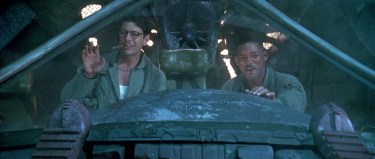
Will Smith and Jeff Goldblum deliver the virus in Independence Day (the movie)The stories that inspire us, and help form our attitudes, tend to undermine this recognition and subliminally support our reluctance to participate.  A story is more dramatic if everything comes down to the actions of one, or a few, people.  If James Bond doesn’t pull off this next stunt, the World Will Come To An End.  Will Smith and Jeff Goldblum, alone, deliver the computer virus that takes down the mother ship in Independence Day, which conveniently disables all the rest; the entire tension of the plot is funneled through that one bottleneck, as it were.  A few superheroes save the universe—well, half of it—in the Avengers movies.  In Netflix’s just-released Enola Holmes movie (mild spoiler), the heroine’s actions save the one person who casts the deciding vote on a British reform act.  We love this trope.

The desire to make everything come down to a few people’s desperate actions can even warp the adaptation of a story.  A number of small, but annoying, changes in the plot of Peter Jackson’s Lord of the Rings movies seem to stem from a tendency to have every crucial point depend on the actions of the nine members of the Fellowship.  For example, in the books, the Ents meet and decide the time has come to attack Isengard.  In the movies, the Ents decide not to act—until Pippin and Merry maneuver Treebeard to where he can see Saruman’s wanton destruction of the forests (on the absurd assumption that the Shepherd of the Trees didn’t know about that already).

Pippin lights the beaconIn the books, Denethor sensibly sends a messenger from Minas Tirith to Rohan to call for help.  But the movies leave it to Gandalf and Pippin to fire up a beacon that transmits the call to Rohan.  (The fact that the lighting of the beacons is one of the most terrific scenes in the whole series doesn’t entirely mitigate the plot diversion.)  When the Corsair ships sailing up the Great River to Minas Tirith turn out to contain relief for the city rather than further invaders, the movie makes this just Aragorn, Legolas, and Gimli, along with the faceless army of the Dead—rather than a whole array of human reinforcements from South Gondor, as in the books.

Aggregates and Bottlenecks

But when we return to the mundane world, we have to put aside this tempting way of telling a story.  We don’t often see this pattern of world-saving heroic acts.  We find instead that crucial changes depend on the combined actions of innumerable people, all doing the right (or wrong) things.
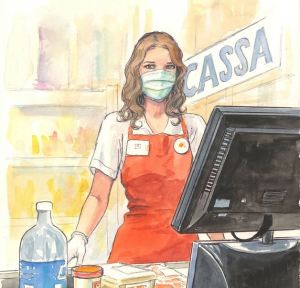
Milo Manara honors heroic women

Milo Manara honors heroic women

The present moment can provide us a heightened appreciation of these unnoticed individual actions.  The early days of the COVID-19 pandemic saw an outpouring of support rightly directed to the unsung heroes—doctors and nurses and medical technicians, grocery store clerks, people who make toilet paper—unsung because they are too many to spotlight individually.  (Although individual acts of appreciation are still a just way to honor those continuing acts of undemonstrative service.)  Indeed, everyone has to act in concert if the pandemic is to be contained.

Peter Jackson’s Gandalf gets the underlying point right in one of the Hobbit movies:

I have found it is the small things, everyday deeds of ordinary folk, that keeps [sic] the darkness at bay.  Simple acts of kindness and love.  (The Hobbit:  An Unexpected Journey (2012), at about 1:42)

We must all be heroes now.

Of course, going in and making some marks on a piece of paper doesn’t feel much like heroism—even less so than wearing a facemask.  Perhaps it feels a little more dramatic when we’re braving the chance of coronavirus infection to cast our ballots.  And if that way of viewing our action as a daring deed spurs us to act, by all means indulge!

But in this kind of case, the only way to achieve anything is by small actions, each of which contributes to a whole.  The entire set makes a difference; but there can’t be an entire set unless there are individual acts.  In voting, as in picking up one’s trash, or in the innumerable actions that make up a free market, we must carry out the individual actions to produce the aggregate effect.

Turning the Tide in Real Life

If we need further encouragement, we can look to the additional fact that even one vote, or a few, can sometimes make the crucial difference.
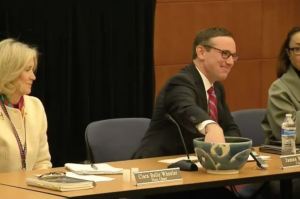
Virginia Board of Elections draws lots to decide tied electionRight here in Virginia, we had an election in 2017 that resulted in a literal tie:  an equal number of votes for each candidate.  A purely random action had to be used to break the tie.  “Each candidate’s name was placed in a film canister; those were then placed into a bowl and one name was drawn.”  (NPR, 1/4/2018)

Even a few votes, even one, can make the critical difference, as recounted here and here—notably including “the year 2000 U.S. presidential election, decided by a few hundred votes in the state of Florida”  (Jared Diamond, Collapse:  How Societies Choose to Fail or Succeed (2005), “Further Readings” for ch. 16, p. 556)  Over and above my contribution to the whole, I cannot know in advance whether my vote might not be, in fact, the deciding factor in a hotly contested election.

Moreover, even if the outcome of an election might be clear without my vote, adding to the total is not pointless.  In today’s atmosphere of distrust and suspicion, the clearer and more decisive the result, the less opportunity there will be to cast doubt on the results.  Every vote added to the total reduces the number of people who will be convinced that the results are false, and thus directly supports the rule of law.

This concern also bears on the notion of voting for a third-party candidate.  In the upcoming election, many people may be sufficiently dissatisfied with both major parties to be motivated to cast their ballots for a third-party contender.  It might feel virtuous to spurn both parties and “vote one’s conscience” in favor of a candidate who cannot win.  But in practice, that action will only serve to make the results less clear, at a time when clarity is vitally needed.

L’Envoi

Voting is much trickier—even perhaps a heroic act, as noted above—in these pandemic times.  Nevertheless, there are avenues available by which all of us can safely exercise the franchise.
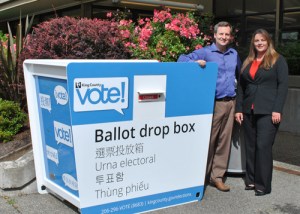
Drop box for ballotsFor my own locality in Virginia, here’s a guide to voting early, voting by mail, and voting on Election Day.  The local paper has a Web site on How to Vote, by state; I haven’t researched that reference in detail, but it may be useful.  Here are three articles on drop boxes for ballots.

I urge every eligible voter to take part in this crucial action of self-government.  Unless you’re actually in the hospital in a coma (or the like), there’s no excuse not to participate.

The Highest Form of Humor

Puns are of course the highest form of humor.  But why?

A Mixed Rep

I am deliberately flouting the usual claim, of course, that puns are the lowest form of humor.  (That judgment seems to have been traced back to several sources, including Samuel Johnson.)  The appropriate response to a really good pun is considered to be not a laugh, but a groan:  the better the pun, the louder the groan.

On the other hand, the use of the pun has weighty, even punderous, examples on its side.  The art of punning goes back into ancient times.  Shakespeare himself is estimated to have used over 3,000 puns in his plays.  Even Jesus, as is frequently noted, founded his church on a pun:  “We read in Matthew 16:18: ‘Thou art Peter (Greek Petros), and upon this rock (Greek petra), I will build my Church.’”

In Patrick O’Brian’s Aubrey-Maturin novels, bluff Captain Jack Aubrey is frequently derided by more sophisticated characters for his delight in puns.  I recently ran across a mention in Treason’s Harbour, ch. 2 (p. 45):

. . . Meares, who was only a commander.  A brilliant play upon this name occurred to Jack, but he did not give it voice:  not long before this, on learning that an officer’s father was a Canon of Windsor he had flashed out a remark to the effect that no one could be more welcome aboard a ship that prided herself upon her artillery-practice than the son of a gun, only to find the officer receive it coldly, with no more than a pinched, obligatory smile.

Treason's Harbour coverPersonally, I thought the “Canon” joke both funny and clever; but then, I’m not the one being called a son of a gun.  The attraction to puns is characteristic of Jack Aubrey, though, given his innocent enjoyment of simple pleasures and general good humor (badly represented in the movie version).  I note that even Wikipedia cites an Aubrey pun as an example.

Chain Puns

Those with agile minds can have great fun ‘running a topic’ with rapid-fire pun volleys.  I recall staying up late one night on a high-school retreat with some buddies and Father Bill LaFratta, who outdid us all in puns on a subject like ‘cars’ (and may be responsible, or reprehensible, for my subsequent descent into pundom).  Our family has occasionally gotten into text message exchanges that build off one another, on topics like, for example, Dungeons & Dragons.

David:  Come to think of it, Marx could work as an orcish name . . . and orcs could serve well as the meanies of production.

Rick:  “Keep your head down . . . there’s an orcish Marxman over there, I just saw an arrow go by.”

David:  He was just advocating for an equitable distribution of health.

Rick:  Or death.

David:  And the archmage leading the orcish jacobins could be robes-pierre.

Rick:  And hoping the audience gets the point of his argument.

Callahan's Crosstime Saloon coverScience fiction writer Spider Robinson is extraordinarily fond of (and good at) wordplay.  At Callahan’s Place, the fictional bar in his series of stories, Tuesday night is set aside for trading ever more appalling puns on a given topic.  I’m not even going to attempt to reproduce Robinson’s groan-worthy inventiveness; check the stories out for yourself!

Shaggy Dogs and Feghoots

Then there’s the story that ends, after an elaborate build-up, with a pun—a variant of the shaggy dog story.  Snoopy, at his typewriter, occasionally indulges in one of these, as in a recent Peanuts reprint (8/3/2020).  Ideally the pun-ch line will include multiple puns, so as to make a fitting topper for the build-up.  I fondly recall the quintuple pun about immortal porpoises, presented in different forms here, here, and (under the rubric of “dad jokes,” naturally) here.  As in that case, getting the punch line may require knowing some particular phrase or quotation, on which the conclusion of the story is a takeoff, and thus become dated; for example, “East is East, and West is West, and never the twain shall meet.”  (On the other hand, I don’t think I’ve ever actually seen the original phrase in the porpoise pun:  the joke version makes clear enough what the original would have been—at least for comic, as opposed to legal, porpoises.)

The Compleat Feghoot, coverThere’s an entire category for short stories whose conclusion is a pun:  “Feghoots,” named for a series of science fiction stories by Reginald Bretnor, “Through Time and Space with Ferdinand Feghoot.”  A favorite of mine that isn’t mentioned in the Feghoot article is “The Holes Around Mars,” by Jerome Bixby, who was also (incongruously) responsible for the chilling story “It’s a Good Life,” which was made into a Twilight Zone episode.  The “Mars” story, however, is just good fun all the way through, featuring a spaceship captain addicted to puns, and ending with—Well, I see the text of the story is available at Project Gutenberg, so I’ll let you find out for yourself (if you dare).

Tom Swifties

Tom Swift and his Diving Seacopter, coverTom Swift was the lesser-known science-fictional counterpart to the young detectives Nancy Drew and the Hardy Boys.  All three series were ghost-written by various authors under the auspices of the Stratemeyer Syndicate.  Given the provenance, the books were, let us say, not esteemed for their literary style.  In particular, the Tom Swift books were prone to using adverbs, especially adverbs ending in “-ly,” to decorate the supposed plainness of simply using “said” in dialogue.  There’s an example of such dialogue at the Wikipedia page.

A “Tom Swiftie” is a pun in which a speech adverb of this sort is used to make a pun on the rest of the sentence.  By convention, the speaker is always “Tom.”  Hence:

“Close the refrigerator door,” said Tom coldly.

“The man is dead,” said Tom gravely.

But we can get more inventive than that.

“Let’s invite Greg and Gary!” said Tom gregariously.

“We’ve arrived at the camp,” said Tom attentively.

As a dedicated reader of the “Tom Swift, Jr.” series in the 1960s, I’ve always been fond of this variant.

Puns of Opportunity

But we may get the greatest satisfaction from hitting upon a pun unexpectedly.  When a never-before-heard pun evolves naturally out of a conversation, surprise adds to the fun of the sudden (in)congruity.

A writer can enjoy the same effect when they come up with an unplanned witticism.  The unexpectedness may not be evident to the reader, who may assume the author carefully set up the line, but the writer knows better.

Japanese painting of a carp

Utagawa Hiroshige, Suidō Bridge and Surugadai (1857)

I remember the delight with which I happened upon a clinching line for a scene in The World Around the Corner.  In their online game, the characters have come upon an underground pool inhabited by a talking fish, the Carp of Doom.  (I think I chose “carp” based on a hazy recollection that carp were renowned for wisdom in some Asiatic mythologies.)  The fish gives them directions for the next stage of their quest, which, naturally, starts out by taking a tunnel from the underground cavern.

“Clear directions for once.” Badon gave a cheer. “I like it. Onward, up the carpal tunnel!”

Dana wished very much that Badon were physically present. She’d like to throw something solid at him…


The Virtues of Puns

So, puns are fun.  Why am I motivated to call them a high form of humor?

I locate the root of humor in incongruity—things don’t fit together as we expect them to—with the proviso that when things do fit together in an unexpected way, more neatly than we would have supposed, that in itself is a kind of incongruity:  as a child might laugh with pleasure in discovering how puzzle pieces make a picture.  Puns fit this basic concept.  When words don’t work the way we anticipated, but make a new whole (the connection between the two meanings) in an entirely different way, we do tend to laugh with glee—unless we’ve been socially conditioned to regard the proper response as a groan, of course.

Puns are clever.  They reward inventiveness and agility of mind.  (In this respect, they share common ground with creative problem-solving and “thinking outside the box.”)  They’re also playful; they take words lightly and turn them topsy-turvy.  We might consider puns and other wordplay as the intellectual equivalent of kids playing on a jungle gym, turning and stretching and going upside-down.

There’s an interpersonal aspect as well.  In chain punning or following a subject, the participants play off each other.  As in other forms of witty banter, one person’s last remark is the jumping-off place for another person’s next remark.  Thus, there’s a certain form of cooperation involved, like that of a volley in tennis—and, just as in the tennis match, an opportunity for one-upmanship and “counting coup” as well.  I love hearing someone else make a good pun, but I can’t deny that I’m also immediately searching for a “Can you top this?” response.

Geniality

Charlie Chaplin's Little TrampThere’s a subtler factor too.  A great deal of humor involves a kind of overt or covert meanness.  Puncturing human dignity and pompousness is a classic formula for humor; but doing so tends to involve some degree of pain or humiliation.  When someone—especially a well-dressed man in a top hat—slips on a banana peel, we laugh at the incongruity but ignore the bruised hip and the embarrassment.  Sophie Kinsella’s romantic comedies are great fun; but they frequently involve her heroines in extraordinarily embarrassing situationsCharlie Chaplin’s “Little Tramp” character combined humor with pathos.

I would not go so far as Michael Valentine Smith, of Stranger in a Strange Land, who finally comprehends the laughter of Earth people as a response to pain (ch. 29):  “I’ve found out why people laugh.  They laugh because it hurts . . . because it’s the only thing that’ll make it stop hurting.”  Pain isn’t essential to laughter; maybe to rueful or ironic humor, but not all humor.  Still, Mike has his finger on this much truth:  humor often does play off pain.

Puns, though, are innocent of this painful aspect.  Only words are harmed or abused.  No people have to be embarrassed for a pun to succeed; it’s only language that gets twisted and skewed and made to do unnatural things.  Even when a pun responds to a “straight line,” it doesn’t normally reflect badly on the previous speaker.  The pun is recognizable as a flight of fancy based on a perfectly innocent phrase, not on the human being who uttered it.  And when people are volleying puns back and forth, each line serves as the straight line for the next flight.  It brings to mind the reference to a nonhuman species of habitual jokesters in David Brin’s The Uplift War (ch. 85):  “To a Tymbrimi, the best jokes were those that caught the joker, as well as everybody else.”

The Downsides

Still, a pun is not always entirely harmless.  The punster’s affectionate ‘abuse of words’ can lead to excess.

For one thing, as with other forms of wordplay, punning requires familiarity with the language.  Wikipedia, discussing the rhetorical use of puns, observes:  “A major difficulty in using puns in this manner is that the meaning of a pun can be interpreted very differently according to the audience’s background and can significantly subtract from a message.”  For the same reason, puns are likely to be untranslatable.  The connections between words, their similarities in sound or written form, will not be the same in another language.  This kind of problem occurs in translation generally, as noted by my critique buddy Blandcorp in a recent blog post.  It affects puns along with all forms of art that depend on the specific nuances of words.

It’s also possible for puns to be abused in social situations.  I learned early on, when I took up punning as an avocation, that simply responding to people’s remarks with a stream of puns wears out its welcome pretty quickly.  (In extreme cases, one might find one’s conversational partners inclined to take punitive measures.)

The reason is that a pun, by its nature, derails the conversation.  It diverts our attention from the meaning of a previous remark to its verbal form.  A momentary side trip of this sort may be entertaining, depending on the context.  But if I keep repeatedly making these side trips, I’m getting in the way of the conversation other people are trying to have.  I would be frustrating those who are trying to talk, because the puns interfere with making sense in the language.

It’s one thing, then, to pause with like-minded friends to engage in a pun war (or pun festival).  In ordinary conversation, though, puns are best used sparingly, like seasoning in a dinner dish.  (A pun out of season goeth before a fall, we might say, or even before a winter of discontent.)

In other words, we should pun with moderation, as in all things—even in the highest form of humor.