Noblesse Oblige

Introduction

One of the advantages of introducing my wife Geraldine to Lois McMaster Bujold’s Vorkosigan saga – as well as her Sharing Knife series (both in audiobook form) – has been the opportunity to think further about everything these stories bring up.  Revisiting these favorite fictional haunts may be particularly illuminating when we do it in an alternate format, with an audio narrator contributing to our perception of the story along with the text.  It’s often said that authors should read their own writings aloud, because we catch different things that way than by simply reading them in print; and the same may be true of another author’s works.

One of the continuing themes of the Vorkosigan series is the role of personal connections in government.  Our principal protagonist, Miles Vorkosigan, is the son of a Count in the Barrayaran interplanetary empire, limited in extent (three planets) but headed by an Emperor.  In a quasi-feudal setup of this sort, even one that’s gradually developing in a more democratic direction as on Barrayar, aristocrats have certain privileges, and the Emperor has quite extensive powers.  The system is held together by essentially personal relationships.  The Counts have their authority through oaths to the Emperor, and some members of their households, such as “armsmen,” swear similar individual oaths to the Counts.

Cutting Through the Red Tape
At one point in Miles’s rather irregular career, Emperor Gregor appoints him an “Imperial Auditor.”  These Auditors are the Emperor’s elite troubleshooters:  their activities reach far beyond financial audits, although Bujold does trace the term back to financial roles (and indeed tells us that the “Counts” were originally the Emperor’s accountants, deputized to ensure taxes were properly paid).  At the time of the stories, an Imperial Auditor speaks with the Emperor’s Voice and thus has almost unlimited authority – although one summary notes that “most subjects endowed with their superior’s Voice tended to be circumspect about its power.”

Miles’s actions bear this out.  He doesn’t use his Auditorial authority for his own benefit; he uses it to carry out necessary investigations and organize the empire’s officials and staff for necessary actions.  The overriding delegated authority of the Emperor allows things to move faster than normal bureaucratic procedures would allow.
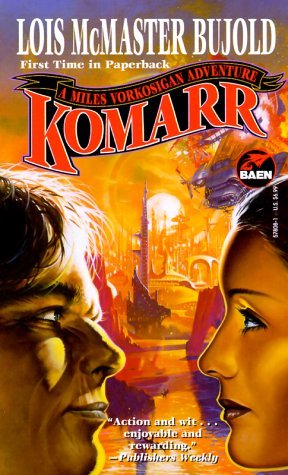
In addition, Miles uses his authority to override the usual procedures in the name of mercy or decency.  In a notable example, one Madame Radovas, the widow of a scientist who had just resigned from government service, asks whether she will receive the normal survivor’s benefits.  The rules say that she isn’t eligible, since her late husband had resigned before his death.  Miles, however, makes an exception.  “Gregor does not approve of widows being left destitute.  Trust me on this one.  Vorsoisson, go ahead and run the benefits through for her anyway.”  Komarr (1998), (ch. 6, pp. 117-118)

Our sympathies are all with Miles in this case.  Even though Madame Radovas actually turns out to be one of the bad guys eventually, the reader enjoys the way Miles has cut through the red tape to achieve a more merciful result than the regular rules would allow.  He’s using his peculiar power for a good purpose.

An even more dramatic example occurs in the following volume.  In one of my favorite scenes, the Emperor himself intervenes at the request of a young boy, who (with his mother) is trying to resist being taken away and placed under the care of a well-meaning but misguided relative.  The law might arguably be on the relative’s side, at least for the moment, but Emperor Gregor can suspend this transfer of custody until things work themselves out.  We are delighted by the consternation and embarrassment of the misguided relatives because we, the readers, have the privileged position of knowing that Gregor is in fact making things right.  (A Civil Campaign (1999), ch. 18-19, pp. 462, 476)

Most of us get a kick out of seeing some sympathetic character bypass the rules to get the right thing done, whether it’s the “maverick cop who doesn’t play by the rules” (as my children learned to recite the cliché) or the super-hero who operates outside the usual constraints.  But this only works because we agree with the end result.  If the characters with special privileges or abilities were using them to make things worse, our reaction would be exactly the opposite:  outrage that someone was bending the rules for personal gain or for evil ends.

The Obligations of Power

The old French expression noblesse oblige (literally, “nobility obliges”) captures an idea that has been in play throughout human history:  as the Wikipedia page puts it, “nobility extends beyond mere entitlement, requiring people who hold such status to fulfill social responsibilities.”

Even in the traditional feudal system, obligations actually run both ways:  lords have obligations to their vassals, reciprocating the vassals’ obligations to their lord.  We see this in the Vorkosigan saga:  for example, early in the series Miles takes a man’s oath as an armsman to protect the man in question, rather than to reduce him to servitude.  (The Warrior’s Apprentice (1986), ch. 5)

But noblesse oblige extends beyond this.  It carries the sense that the more powerful are especially required to use their powers rightly, even dutifully.  It stands in opposition to the notion that might makes right – that it’s okay to do whatever you can get away with or force others to accept.

The concept ties in with the Biblical notion that the purpose of a ruler is to serve, not to dominate (Matt. 20:25-28).  Or, as it’s put in another quasi-feudal science fiction setting, David Weber’s Dahak series:  the protagonist’s children are to gain “[t]he knowledge that power is a responsibility.  The belief that who they are and what they do is as important as what they’re born to.  A tradition of – well, of service.”  (Heirs of Empire (1996), ch. 5, p. 60)

With great power comes great responsibility

This formulation reminds us that the concept isn’t limited to an aristocracy.  It applies to anyone with power of any sort.  The modern version (for us commoners) is the tagline we associate today with Spider-Man:  “with great power comes great responsibility.”  Or, in more traditional language:  “Much will be required of the person entrusted with much.”  (Luke 12:48)

Virtue and Power

We trust someone to cut across the rules, then, when we’re confident they will do the right thing.  For an aristocrat, we want them to have that sense of noblesse oblige.  If we’re going to have aristocrats, we need virtuous aristocrats.

The Bujold examples above work because we trust Miles and his circle to do the right things with their power.  This isn’t a given.  Even on Barrayar, those in charge haven’t always been virtuous.  “Mad Emperor Yuri,” a generation earlier, is frequently cited in the stories.  And Gregor’s father, Prince Serg, is shown in the early stories as a sadist willing to violate the rules on treatment of prisoners for his own enjoyment.  Even Emperor Ezar Vorbarra, who overthrew Yuri, behaves high-handedly (for example, inserting an experimental memory chip in a lieutenant more or less to see what would happen).  The admirable practice of governance currently in effect is quite recent.

History, as well as fiction, teach us that aristocrats are likely to abuse their privileges.  It may take exceptional people to turn that natural tendency in the right direction.  In the Vorkosigan history, the relatively benign situation we encounter in most of the series owes a great deal to the positive influence of Miles’s parents, Aral and Cordelia Vorkosigan.  In particular, Aral was the regent for Emperor Gregor during his formative years. But we can also see such influence, direct or indirect, on others, such as Ivan Vorpatril and Simon Illyan.  (If I’m drowning you in obscure references to a series you haven’t yet read, please accept my apologies – then go ahead and read the stories, they’re worth it.)
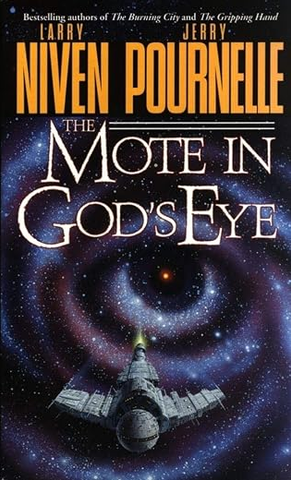
The Mote in God's Eye, cover

To take the case of a different interstellar empire, Larry Niven and Jerry Pournelle’s The Mote in God’s Eye (1974) gives us starship captain Rod Blaine, who is frequently annoyed by his irreverent sailing master Kevin Renner.  Like Miles, Rod is dedicated to doing the right thing.  Renner is happy to indulge in digs at the Empire’s aristocracy, but when push comes to shove, he admits that even he depends on the governing class to be the kind of people who can be trusted:  “Hell, Captain, it’s because of guys like you that I can accept the aristocracy—”  (ch. 40, p. 341)

Of course, it’s easier to ensure this in fiction than in real life.  An author can arrange for good people to be in charge, people who understand their responsibilities.  In actual practice, it’s harder to distinguish the responsible from the irresponsible, or to prevent the latter from gaining power.  We can choose whether to write a utopia, a dystopia, or something in between; but more is needed to stave off the real-life drift toward dystopia.

Virtue and Wisdom

Even the best of intentions are not enough.  Rules, even those we stigmatize as “red tape,” are generally made for a reason; thus ignoring them will often lead to unfortunate consequences.  It takes unusual perceptiveness and wisdom to recognize the exceptional cases when the rules should be ignored.  We trust Miles not only because he’s a good man, but also because he’s incredibly smart – which is why we enjoy watching him get himself into untenable situations and then frantically improvise his way out of them. 

What is true of an aristocracy – hereditary leaders – is more broadly true of any leaders.  We need them to be people of both good will and good judgment.  Thus, for example, an article last year by Fareed Zakaria notes the need, in a non-aristocratic society, for “expanding access to education and networks so that mobility is real, while cultivating leaders who can see beyond their class and credentials. The problem is not that elites exist but that they have grown detached.”  (emphasis added)  We want anyone with power to have learned Spidey’s lesson about acting responsibly.

The themes we’re investigating here thus converge with those of some earlier posts.  They generalize the concept of “the Good King” and further articulate the notion of the rule of law.  As the latter post pointed out, we need good people as well as sound laws.  “Good men can make poor laws workable; poor men will wreak havoc with good laws” (James M. Landis, 1960; see this article at 432 & n.107).

The lead character in a Harry Turtledove novel used to ask herself when in difficulties:  what would Miles Vorkosigan do?  If we are in a position to exercise any power or authority, we can certainly imitate Miles in one respect – in cultivating a sense of noblesse oblige.  Any of us may be called upon to be a leader at times; we should be prepared to be the right kind of leader.

This Year’s Odyssey

A Spectacle and a Conversation Piece

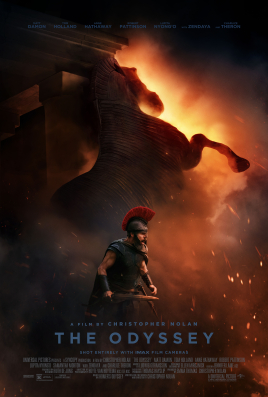
It’s just a quarter-century since the nominal date of 2001:  A Space Odyssey.  This year’s odyssey, the Christopher Nolan film, isn’t a space voyage, although one might argue it is science fiction, Bronze Age style.  The perils and wonders that the ancients could imagine far across unknown oceans must, in our era, be displaced to outer space, now that Earth has no place left to hide such marvels.

The Odyssey film poster

I finally got around to seeing The Odyssey this weekend.  Though I didn’t see it in IMAX, the spectacle is immense.  The soundtrack is also extremely loud, so much so that the seats in the theatre were shaking, even without the specific haptic features I encountered when I saw the last Indiana Jones movie.  Aside from all this sensory extravagance, The Odyssey is also very good; I recommend it.

The most remarkable thing about Nolan’s version is the amount of discussion it’s touched off in the press.  Since the movie came out I’ve seen a new article every day or two.  This is another good thing:  thinking about a story adds another layer of interest to the underlying experience of seeing or reading or hearing the story itself.

By now, judging by the difficulty in getting tickets at reasonable hours, a large fraction of the public has probably seen the film.  However, for those who haven’t, I’ll issue a

Spoiler Alert!

Adaptation

The commentators are pretty much in agreement that Nolan’s version diverges considerably from Homer’s.  (I really need to reread the original poem; it’s been ages.)   There’s nothing wrong with that.  Retellings and overhauls of classic myths and legends have always been with us; Homer’s written work itself was probably a distillation of pre-existing oral traditions.  It’s even possible that a later adaptation of a story, such as a movie version, might be better than the original.  More commonly, as here, a new version doesn’t displace the canonical version, but adds another alternative.

The Odyssey, book cover

If a new version like Nolan’s reworks the themes and meanings of a story as well as the plot, purists may decry the desecration of the original, while others (impurists?) may laud the new tale’s accessibility to modern audiences.  There are advantages and disadvantages on both sides.  There’s a real benefit to engaging with a classic text when it forces it to confront assumptions and ideas that are quite different from our own.  This is one reason the introductory philosophy courses I used to teach required students to read the actual works of Plato, Aristotle, Descartes, Kant, and others (in English translation, granted).  At the same time, a contemporary version can use the classic story to illuminate aspects of our own time and concerns, and to bring out the commonality of human beings over the ages.

Thus, for example, the curious prominence of what’s described as “Zeus’s law of hospitality” or kindness to guests, xenia, in Nolan’s version often sounds more like a modern conception of decent treatment.  One article quotes a scholar as saying that “it’s not surprising that Nolan would take a concept like xenia and tie it to more ‘monotheistic religious concepts’ such as the Golden Rule.”

Civilization and Collapse

An article by Ezra Klein in today’s New York Times, “Christopher Nolan’s Trojan Horse,” makes some especially interesting points.  He notes that Matt Damon’s Odysseus is not Homer’s trickster hero, but a much more straightforward man with a 21st-century conscience.  What is haunting this modern Odysseus is not just PTSD or the horrors of war, but the sense that his Trojan Horse trick to destroy Troy, in defiance of the law of hospitality, will have far-reaching consequences.  As another article puts it, Odysseus “feels that he has been complicit in the destruction not just of a civilization, but civilization itself.”

If one basis of civilization is the willingness of people (at least some of the time) to live by moral standards, whether the xenia law of hospitality or the Golden Rule, then undermining that attitude destroys far more than a single city.  Odysseus fears that his “violation of the moral order” will bring down chaos on the Mediterranean civilization in which he has lived.

Illustration of Late Bronze Age collapse

And apparently there actually was a collapse of civilization in the period when this epic is supposed to take place.  Wikipedia’s article on the “Late Bronze Age collapse” mentions a number of different causes for a “societal collapse” across the whole Eastern Mediterranean and Near East, including the Sea Peoples invasions to which Nolan’s characters often refer, along with changes in technology and warfare.  “The deterioration of these governments interrupted trade routes and led to severely reduced literacy rates in much of this area.”

Could the Trojan War have kicked into motion a chain of events that led to this widespread a collapse?  The archaeological evidence, of course, can’t say much about that detailed a conclusion one way or the other.  But this unknown is what gives the storyteller an opening to speculate, and to use compelling characters and events to show possible implications.

Into the West

From this perspective, Nolan’s ending, which is quite different from Homer’s, adds a welcome note of hope.  The Odysseus of the film leaves his son Telemachus in charge of the Ithacan kingdom and sails off into voluntary exile with his reunited love Penelope, fulfilling her plea earlier:  “What if we ran? . . . headed for the horizon.  Held hands on deck as we rode west at dusk, chasing the escaping sun.  There’s a world beyond these walls.”  (see Wikiquote)  I don’t recall exactly the final lines, but Penelope says that “civilization will rise again,” and Odysseus responds:  “A new dawn will break over the darkened world, when our mistakes will once again be forgotten.”

It’s a comforting thought that even if Odysseus’s Bronze Age civilization is headed for a dark age, there can someday be a renaissance—as did occur in the Mediterranean, when the dark age was succeeded by what we now think of as classical antiquity.  When we are concerned about the fate of our own civilization, we should always keep in mind that possibility of renewal—with or without an intervening dark age.

That note of hope fits well with the movie’s final scene, the image of going off “to sail beyond the sunset,” in Tennyson’s phrase.  One is irresistibly reminded of the final image of The Lord of the Rings, in which Frodo and his companions leave Middle-Earth for the blessed lands of the West.  Whether for individuals who have suffered as Odysseus, Penelope, and Frodo did, or for our whole culture, there may yet be new hope, if we can find the right direction.

An Epic Flash Mob Carol

Every year at Christmas I treat myself to a viewing of a YouTube video by a family of musicians called The Five Strings.  The video is titled “O Come All Ye Faithful – Epic Flash Mob Carol,” and that title pretty much summarizes it—but hardly communicates the warmth and effect of the piece.  Here’s a link:  you might want to watch the 4:45 video before going on to my spoilers.

https://www.youtube.com/watch?v=XI2c9yptr4U

I ration my viewing because I don’t want to let the effect grow stale.  By the end of the song there are tears in my eyes, my chest is swelling with joy, and I feel rejuvenated with the grace of the season.

So, to paraphrase Jo Walton’s classic question, what is it that makes this performance so great?

The Song

To start at the least important end, it’s awfully cute.  The young performers are adorable, and the idea of a set of siblings setting out to bring cheer to the world is charming.  Second point:  they’re good.  The voices are wonderful, and the instrumental performances are great.  And of course the surprise and joy of the people listening are lovely to see—not to mention the visible enthusiasm of the performers.

The music itself is brilliant.  We all know the song, of course.  Here, though, the lyrics are slightly different from the familiar ones—just different enough to catch our attention.  And the musical arrangement raises the well-known tune to a new level.

Singer from The Five Strings begins the carol

The flash mob method means the song starts off with a single lonely voice, which is gradually joined by more and more voices and instruments.  Variety grows as the song proceeds.  There’s a quick violin interlude at 1:40 that’s almost like an Irish jig, and it seems to shift time signatures as it segues into the second verse.

The low notes of the cello that enters about 2:20 add depth to the sound.  And at 2:34 the phrase is unexpectedly drawn out, leading into a crescendo to the third verse and the sight of the whole company facing the viewer in song, with a lighted star behind them.  At 3:13 the harmonization of the refrain shifts, along with the lyrics, lifting the song to a new level of glory.  And the very end brings all this grandeur to a hushed conclusion.

And the Singers

The very idea of a flash mob has an effect here.  A group of people coming together in a seemingly random fashion, out of careful planning, just to entertain or amuse, is pretty nifty in itself.  A 2010 video of a flash mob in a food court doing the Hallelujah Chorus is fun partly just because of the absurdity of imagining that something as complex as the Hallelujah Chorus could come together out of nowhere.  It’s reminiscent of the movie musicals in which everyday people seem to be able to break out spontaneously into song-and-dance numbers at will (see TV Tropes’ “Musical World Hypotheses” for an entertaining discussion).  One of my favorite examples is “That’s How You Know” in Enchanted, which slyly pokes fun at itself (as does the whole movie).  Apparently Giselle came into the mundane world with the ability to cast the spell ‘Summon Production Number’.

But in the Five Strings video, the gradual accretion of a mob of musicians has a greater effect.  It’s as if the faithful really are coming together at the summons of the song.  There’s no attempt to make it seem spontaneous—it’s obvious that the effort has been planned in advance—but the stepwise addition of more and more strands to the performance is like opening a series of Christmas presents.  Except that here, the whole adds up to more than the sum of the parts.

It occurs to me that the emotional effect lies near to what Samantha Edmonds calls “the rally” (or “the Riders of Rohan phenomenon”).  She puts it this way:

This isn’t just a “sudden happy turn” in a narrative: as I’ve argued, what sets these scenes apart from other kinds of eucatastrophes is that the RoR phenomenon is specifically a choice made by a community. This is the moment your team shows up. Another friend agreed, explaining, “What makes these scenes so important is that often it’s chosen family who is arriving in these moments of great need, when things are darkest and most unwinnable.” . . . .

. . . . .I argue that the greatest “Consolation” of the fantasy genre isn’t the happy ending: it’s Companionship.

Granted, we don’t think of Christmastime this way when we wax sentimental about it.  And there’s nothing wrong with that sentiment.  But the Christmas story itself is precisely about sudden hope arriving in the moment of great need.  And when one enthusiastic group of companions after another arrives to join in the song, that is rather like seeing “your team” show up.  Even if they’re strangers to the people listening from the front doors, they belong to a common cause.

The Five Strings, whole company

Maybe I’m placing too much weight on just a few minutes of celebratory song.  But do take a look at the video.  I think you’ll enjoy it, and if you too find that it moves you, maybe someday we’ll figure out why.

Terabithia and Narnia

Recently I picked up Katherine Paterson’s Bridge to Terabithia (1977), which I kept hearing about but had never actually read.  I had had the impression it was a portal fantasy about a couple of children, but that isn’t correct:  it’s about a couple of children with vivid imaginations who play at fantasy.

The edition I read had an introduction that tipped me off that something terrible was going to happen in the story.  (Since this book is almost fifty years old, I’m going to forgo a spoiler alert.)  So I was prepared when a tragedy did occur.  But I found the ending uplifting nonetheless, because of how the author describes the change this tragedy works in the main character, Jess.  Which may be the point of tragedy, on the whole.

The denouement did get me thinking about something I’d never quite been able to articulate, having to do with the Narnia stories.  Narnia keeps coming up in Bridge to Terabithia; it largely inspires the characters’ imagined world.  So the connection was out in the open.  It isn’t mentioned specifically in the Terabithia quote that sparked my reflection:

It was Leslie who had taken him from the cow pasture into Terabithia and turned him into a king.  He had thought that was it.  Wasn’t king the best you could be?  Now it occurred to him that perhaps Terabithia was like a castle where you came to be knighted.  After you stayed for a while and grew strong you had to move on.  For hadn’t Leslie, even in Terabithia, tried to push back the walls of his mind and make him see beyond to the shining world—huge and terrible and beautiful and very fragile?  (Handle with care—everything—even the predators.)

Now it was time for him to move out.  She wasn’t there, so he must go for both of them.  It was up to him to pay back to the world in beauty and caring what Leslie had loaned him in vision and strength.  (ch. 13, p. 161)

The aphorism that kept coming to mind was “Once a king or queen in Narnia, always a king or queen in Narnia” (The Lion, the Witch and the Wardrobe, ch. 17).  But that’s not quite it.  That line is about continuing to be a king or queen.  But what I kept thinking about was becoming a king or queen in the first place.

See, the Pevensie children, who become kings and queens in Narnia, don’t start out as heroes of mythic stature.  They’re a pretty normal bunch of kids.  There’s no suggestion that they are of extraordinary strength, courage, intelligence, or virtue. They certainly rise to the occasion:  we see them becoming heroes as the story develops.  But their only qualification for royalty, in the first book, seems to be simply the fact that they are “sons of Adam and daughters of Eve”—that is, human beings. (ch. 2 and 8)

The notion that a human being as such has a royal destiny isn’t far from Jess’s thought in the Terabithia quote above.  The other world is where you’re knighted, where your true self is recognized; but you’ve already got the potential.  The other world simply calls you to realize it and carry it out (“pay back to the world in beauty and caring”).

The underlying thought that my reading of Terabithia teased out is that simply being a human being (or, more broadly, a person), a child of God, is enough to qualify one for the kind of dignity and respect that we associate with royalty.  And that’s something worth remembering.

Here’s the appropriate song—unrelated to either book, but matching very closely in theme:  “Kings and Queens” by Audio Adrenaline (lyrics).

The Great Reread:  Hobart Floyt & Alacrity Fitzhugh

Too Many Books

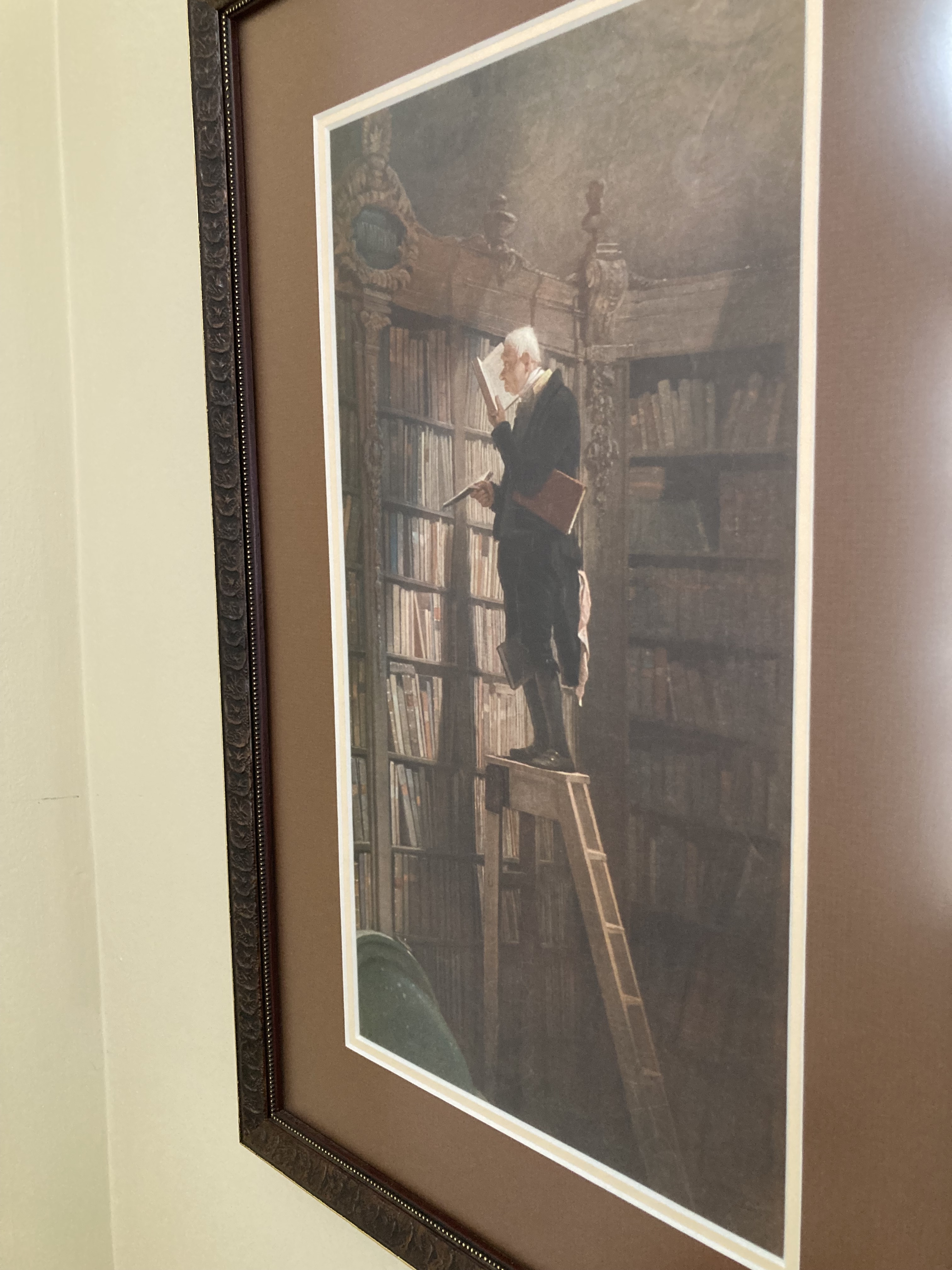
Picture of old man on ladder in large library

Can one have too many books?  I want to say no.  (See the illustration, which hangs on our front hall next to the library.)  On the other hand, it’s become difficult to fit my accumulated collection comfortably into any reasonable home—and doubly so when you add in my wife’s lifelong collection as well—even without the eight or ten boxes of books I sold off to the fabulous Wonder Books in Frederick in an attempt to thin out the collection.  And nonfiction is another story.  (Well, the stories are in the fiction section; but you see what I mean.)

This is so even though I’ve tried to exercise restraint by buying only those books I’ll want to read over again.  I prefer to try out a new book by getting it from the library, and, after reading, to decide whether this is a “keeper” that I always want to have available.  The rare exceptions are new books that I already know I’ll want to own, generally in a series.  While Lois McMaster Bujold’s Vorkosigan saga was still coming out, for instance, I’d grab those off the bookstore shelves at once, sight unseen.  (Though I admit I do have only an electronic copy of Gentleman Jole and the Red Queen—but that’s another discussion.)

Aside from considerations of space, it occurred to me some years ago that the “read again” rationale necessarily diminishes over time.  Given my likely lifespan, how many times am I likely to reread any given volume?  That number is constantly decreasing.  This makes me a little cautious about buying new books—as opposed to using the library.  One of the great perks of my current job is that there’s a county library branch right on the first floor of our building.  I can put a book on hold and nip down while at the office to pick it up.  Same thing to return it.  A wonderful arrangement . . . at least until I retire . . .

The other motivation I’ve had for accumulating books has been a vague notion that they serve as a kind of reference library.  In writing posts like these, it’s convenient to be able to grab a favorite book to check on some point or to make a citation precise.  For years, I kept around an old paperback copy of Neil Jones’s The Planet of the Double Sun (1931, paperback edition 1967), merely as an example of a really crummy old-time SF yarn.  It finally occurred to me that there was no particular purpose in having it—rereading it would be too boring to be worth any use I might make of the mention—and I ditched, er, released my copy to find a new home with some historian of SF.  Haven’t missed it since.

The Great Reread

In the process of going over my packed-and-unpacked-and-reshelved books (two moves in the last two and a half years!), I’ve sometimes found it hard to recall what some of the stories were actually like.  Or I feel as if I’d like to read a book once more before I consign it to the outermost depths.  So I find myself rereading a lot of old material.  Some of it holds up pretty well.  Others, I wonder what I saw in the tale in the first place.  The rereads end up being a combination of final trial—do I want to keep this book?—and fond farewell.

Of course I continue to read new stories too:  new good books are coming out all the time.  But it’s rather enjoyable to revisit some old friends as part of a balanced bookish diet.

And sometimes the old stuff may be worthy of comment.  So I’m going to include the occasional post here from the Great Reread.  The inspiration comes from Jo Walton’s brilliant series of essays, “What Makes This Book So Great,” originally hosted, I believe, at Tor and published in a 2014 collection.  (There seems to be a list of links here; Walton’s own comments on rereading are here.)  I’m not spotlighting what are necessarily the greatest books—but there may be interesting things to say even about the non-great or non-classic tomes I find cluttering my shelves.

Since these books tend to be fairly well aged, I don’t think it’s necessary to issue spoiler alerts in each case.  The comments all have spoilers.

Brian Daley’s Peripatetic Heroes

Requiem for a Ruler of Worlds, cover

I first ran across Brian Daley (1947-1996) in his 1977 novel The Doomfarers of Coramonde, which has the irresistible premise that a sorcerer in a fantasy land summons magical assistance from another world—and it turns out to be an armored personnel carrier, with crew, from the war in Vietnam.  The fish-out-of-water contrast was delightful and the action first-rate.  I was primed to look for more good fun a few years later when Daley published Requiem for a Ruler of Worlds (1985), the first in a trilogy of adventures featuring the mismatched buddies Hobart Floyt and Alacrity Fitzhugh.

They’re still good fun.   The heroes are both likable and relatable—dashing and mercurial Alacrity, a knockabout itinerant spacer with “friends in low places” across the starlanes, and staid Hobart, a minor bureaucrat from a congested backwater Earth.   Alacrity has some personal issues to get over, mostly in the third volume, but Hobart develops most, rising to the occasion as he travels into space to obtain a bequest inexplicably left to him by an interstellar magnate.  The worldbuilding is brilliant: planet after exotic planet, oddball character after still odder character.  The sheer variety and colorfulness of Daley’s cosmos is pleasing.

The Floyt-Fitzhugh saga falls into the category of the “picaresque” tale.  Originally I misunderstood that term to mean the same thing as simply “picturesque,” and the story certainly is that.  When I actually looked up the word, many years ago, I realized it had a more specific meaning:  “Characteristic of a genre of Spanish satiric novel dealing with the adventures of a roguish hero,” as Wiktionary puts it.  That fits our heroes pretty well—Alacrity from the start, Hobart learning fast.  They’re lovable rogues, often on the wrong side of the law (or at least local customs), with hearts of about 12-carat gold.  Even in the last scene of the series, they’re off again to who knows where, one jump ahead of pursuit.

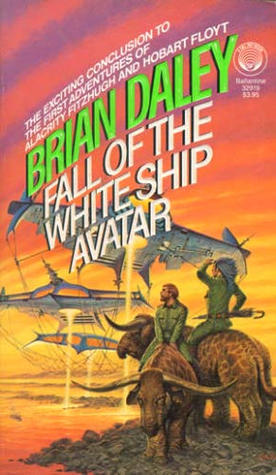
Fall of the White Ship Avatar, cover

And thereby hang my possibly idiosyncratic reservations about the story.  The plot of the first book is very good; there’s a clear goal and climax.  In the second and third books, not quite so much.  Alacrity and Hobart achieve some interesting results, but they themselves don’t actually stop to absorb or enjoy them.  Our Heroes are always on to the next thing.  Daley gives each of them a pretty good romance subplot, but these never quite resolve, since the MCs are always leaving their girlfriends behind—even at the end of the third book, Fall of the White Ship Avatar.  I was left wondering, do these two ever get to settle down and enjoy the fruits of their labors?

This is a standard issue with wandering, picaresque heroes, particularly those who star in open-ended series.  Daley even lampshades this aspect by including a whimsical journalist in the story who features Floyt and Fitzhugh in a series of utterly melodramatic “penny dreadfuls,” to Our Heroes’ perpetual embarrassment and annoyance. Daley seems to want to place them in the company of series heroes whose adventures never really end.  James Bond is never going to stop secret-agenting; he just gets re-cast with increasingly younger actors.  At the end of Indiana Jones and the Kingdom of the Crystal Skull, just when we might expect Indy to retire and be replaced by his son, Indy snatches back his rolling fedora at the last moment.  The ending of The Incredibles or Spider-Man 2 show the characters resolving their personal character arcs, but nonetheless leaping into the next adventure.

One wonders if these perpetual adventurers ever retire, even as they inevitably age. We’ve pondered this previously in considering the “professional hero.” There has been the occasional hero who explicitly retires and passes on the mantle to a successor.  There’s a neat little story in Kurt Busiek’s Astro City showing how superhero Jack-in-the-Box is training his successor.  And Captain America eventually retires in the MCU, though the ‘line of succession’ is rather fraught.

Personally, I like to see the main characters settle down at some point, if only to enjoy a well-earned respite from perpetual danger and damage.  They can continue to have interesting adventures later on; “happily ever after” need not be a static condition.  Consider, for example, the somewhat atypical honeymoon of Miles and Ekaterin Vorkosigan in Diplomatic Immunity.  But it’s satisfying to see beloved characters enjoying some degree of stability.

On the other hand, there’s also a certain appeal to the hero who’s eternally “out there,” a legendary figure, always at their peak and unabatedly themselves.  In a way I don’t want to see Nero Wolfe or James Bond retire.  So I do rather appreciate the perpetual motion of Floyt and Fitzhugh, despite the lack of resolution.  To resolve, or not to resolve?  That is the question—but either answer may be acceptable.  I’ll be keeping the Daley books on my overstuffed shelves.