Star Trek vs. Star Wars

Hatfields and McCoys, Marvel and DC, Star Trek and Star Wars.  One never knows how seriously to take these deadly rivalries.  Personally, I like both of the science-fiction series, so I see the Trek-Wars wars more as a difference in tastes.  Sometimes you feel like a hamburger, sometimes a pizza.

The particular difference I see in SW and ST has to do with their atmospheres or sensibilities.

Good Order
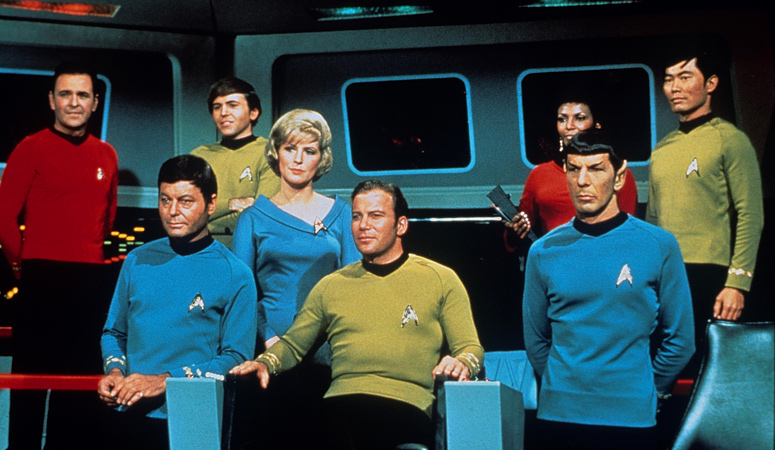
Star Trek TOS bridge crewThe Star Trek universe—I’m focusing especially on the original series (“TOS”) and movies here—is civilized.  There are plenty of things that go wrong, and going where no one has gone before frequently brings us into situations of conflict.  But the Federation itself is organized and mostly decent.  There’s an actual chain of command.  Authority figures are typically respected.

That’s the first approximation.  To be sure, Captain Kirk and his successors don’t mind defying Starfleet orders now and then.  But when Our Heroes turn out to be right, they’re back on amicable terms with their superiors in short order.  At the end of Star Trek IV:  The Voyage Home, Admiral Kirk, after stealing and destroying the Enterprise (among other things), is demoted to Captain again as his “punishment.”  But everyone understands this as simply restoring him to the role he prefers and serves so well.

There’s enough divergence among Starfleet personnel to make the stories interesting, but actual villains in the corps are relatively rare.  Starfleet and the Federation are the orderly defenders of liberty and individual (in our parochial world we say “human”) rights.  That Gene Roddenberry optimism is embedded in the show’s DNA.

Fruitful Disorder

In Star Wars, it’s the villainous Vader who wants to “bring order to the galaxy” (as he says around 1:38 in this clip), and it’s the motley, disorganized rebels who fight for freedom.  Our Heroes are rebels who defy the authorities.  Their chain of command is informal, and pretty much anyone, even the carefree Han Solo, can become a general.

Though the swashbuckling, colorful Star Wars universe may seem lighthearted, it’s actually a rather distressing place.  The nearest outpost of civilization to Luke’s uncle and aunt’s farm is Mos Eisley, a “wretched hive of scum and villainy.”  Slavery has flourished on Tatooine from a generation ago (little Anakin) to Luke’s era (Jabba’s servitors)—and apparently neither the Empire nor the old Republic did anything to stop it.  Intelligent droids are second-class citizens.  In the latter days of the Republic, trade combines were permitted to conduct outright warfare against whole planets (Phantom Menace), with no more than tardy, ineffective intervention by the Jedi Knights.  It seems a much less comfortable universe to live in than Star Trek’s Federation.  Both have their flaws, but the Star Wars ’verse seems much more unstable—if colorfully so.
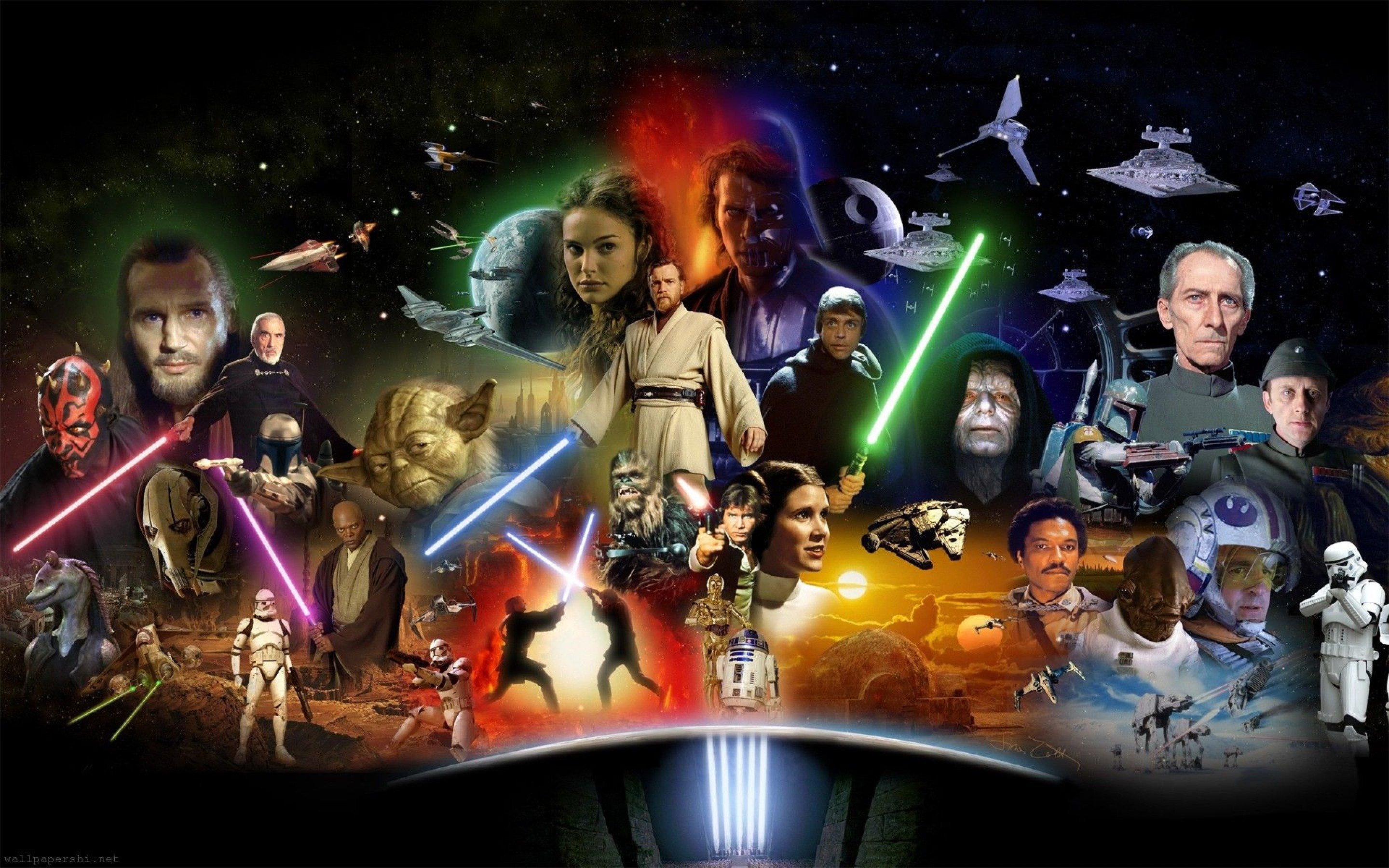
Star Trek composite posterThere’s nothing wrong with this as a story setting.  A varied world full of dangers makes for more exciting stories than a placid utopia.  But the Star Wars setting calls out to a different kind of fan than that of the Trekkies.

Vader’s desire for order actually has good character-based reasons—one of the things the prequel trilogy got right.  In a world where you’ve been held as a slave, your mother has been tortured to death by barbarians, and your beloved is menaced by assassins at every turn, a desire for law and order is extremely understandable.  But it’s the lively Rebels with whom the viewer’s sympathies lie.  In this democratic milieu, quirky individuals and inspired improvisation flourish.

Both the SW and ST approaches represent ’60s sensibilities, but one is slightly later than the other.  Roddenberry’s Star Trek expresses the firm American optimism of the Kennedy era (1960-1963); it isn’t accidental that in the follow-up movies, Roddenberry kept wanting to tell a story about time-traveling to meet JFK.  Star Wars, on the other hand, evokes the counterculture of the late ’60s, which distrusted authority and prized rebellion—not to mention colorful chaos.

The Abrams Factor

It’s instructive to see how J.J. Abrams handled the two, since he has had the opportunity to reboot both Star Trek and Star Wars franchises.  My sense is that he’s handled SW much better than ST.  Abrams’ Star Trek movies show us a distinctly grittier, more chaotic world than Roddenberry’s.  It is, in fact, more like the Star Wars universe.  And I don’t think I’m alone in feeling that, entertaining as Abrams’ ST movies may be, he doesn’t quite “get” what Star Trek is about.  His Star Wars continuation, The Force Awakens, however, is to my mind an excellent (if not flawless) extension of the SW universe.

In other words, making Star Wars more like Star Wars is a good thing, right up to the point where it begins to get slightly repetitious.  Making Star Trek more like Star Wars runs the risk of losing the very things that makes Roddenberry’s creation distinctive.  Both are good things; but they’re not good in quite the same way.

Alignment

One of the interesting things about the Dungeons & Dragons (D&D) game system is the notion of alignment.  D&D is built on ideas from a whole range of fantasy stories.  Many of those stories involve a conflict between good and evil.  Some, however, make the central conflict one of law vs. chaos.  D&D’s creators took the surprising step of adopting both oppositions, but keeping them distinct.  The result is a three-by-three, nine-cell matrix.  A character’s personality and ethical stance can be lawful good or chaotic good, or straddle the two as neutral good.  The being can also be lawful or chaotic evil—the evil of 1984 or of Beowulf, let’s say—or an intermediate neutral evil.  Finally, someone can be lawful neutral (think an OCD personality), chaotic neutral (low impulse control), or “true neutral” double-neutral (an unprincipled pragmatist, perhaps).  The range of combinations allows for shorthand expression of quite an array of character types.Nine alignments example, F&SF

I wouldn’t necessarily buy into this particular classification of famous fictional characters . . . but it gives us an idea how the alignment scheme works in practice.

The alignment chart also yields a neat way to encapsulate the ST/SW difference we’re examining.  Star Trek honors the lawful good:  the interstellar police force, the scientific explorer, the careful defender.  Star Wars admires the chaotic good:  the lovable rogue, the solitary guru, the loosely organized band of allies.

Political theory
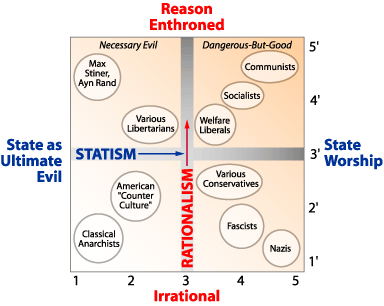
Pournelle political axes chartHere’s yet another way to put it.  Science fiction writer Jerry Pournelle, whose doctorate is in political science, laid out in 1963 a map of political “alignments” with two axes, producing a far more useful classification of positions than the usual left-right continuum.  (Pournelle’s 1986 essay provides a detailed explanation.)  The two dimensions in Pournelle’s scheme are “attitude toward the state” (from state as evil to state worship), and “attitude toward planned social progress” (from rationalism to irrationalism).

If we think of these axes as applying to the character of a culture, not necessarily to politics per se, we can express the ST/SW divide in Pournellean terms.  I’d put TOS-era Star Trek somewhere around 3/4’ or 3.5/4’ on the chart, believing pretty strongly in reason and ambivalent about state power.  Star Wars, by contrast, seems to live in the 2/2’ region, not far from the “American ‘Counter Culture’” to which I compared its ambiance above.  Each milieu will tend to attract viewers who are sympathetic to the points of view expressed in its neighborhood on the grid.

Civilization

What it comes down to, I think, is whether we see the best conditions for free and fruitful lives primarily in order or in disorder.  Both are arguably necessary.  But is what’s best for people a basically orderly society with a healthy modicum of chaos; or a wild-and-crazy culture with just enough organization to hang together?

The Star Trek/Star Wars contrast thus leads us up to the question of what makes for a good society, a true civilization.  There’s a good deal more to be said about this, and I’ll take another crack at it next time.

The Large Spaceship Competition

Enormity

We space opera fans like big things:  sweeping plots and intrigues, larger-than-life characters, huge explosions.  And big spaceships.  The bigger, the better.

You remember the opening of the original Star Wars.  At the top of the frame, the Imperial Star Destroyer looms into view.  And keeps coming, for what seems like forever.  With this visual cue, Lucas communicates immediately the sheer scale of his story.

In a long story, this can lead to a Lensman Arms Race in terms of spaceship size—each new construct eclipsing the last.  One might wonder:  How far can we go with this?  Who holds the record for Largest Spaceship of All?

Traditional spacecraft

Saturn V-Apollo on transporterOrdinary, garden-variety depictions of spaceships are long since out of the running—not just real vehicles like the Saturn V-Apollo, but fictional ones that are meant to be big.  Kate Wilhelm’s title “The Mile-Long Spaceship” (1957) doesn’t sound even slightly impressive any more.  According to Wikipedia, those Star Destroyers range up to 2,915 meters, almost two miles.  The famous size comparison chart by Dirk Loechel displays these, along with the Independence Day mothership, the Dune Spacing Guild Heighliner, the Borg cube, and many more—but Loechel set his cutoff for the image, arbitrarily, at 24,000 meters:  “I had to draw the line somewhere.”

That’s just getting started.

“That’s no moon”

The alien probe in Clarke’s Rendezvous with Rama, which I’ve mentioned a couple of times before, is 50 kilometers long and 16 wide (31 by 10 miles).  That’s bigger than a lot of Earthly cities.

Death StarStar Wars’ Death Star, famously misidentified as a moon, has been estimated at between 100 and 160 kilometers in diameter (62 to 100 miles), at least three times larger.  The second Death Star, from Return of the Jedi, spanned somewhere between 200 and 400 kilometers (up to 250 miles), according to the same Wikipedia article.

Skylark of Valeron coverFor a long time I idolized E.E. Smith’s Skylark of Valeron as the epitome of spaceship scale.  The ship (not the novel of the same name), “almost of planetary dimensions,” is a sphere one thousand kilometers in diameter—about 621 miles (ch. 20).  That’s over twice the size of the large economy-size Death Star.  (A blogger going under the title Omnivorenz has done a detailed analysis of the various Skylark series spaceships.)

However, we’re still in the moon category, not yet up to planet-sized.  (Of course, if astronomers keep changing the rules on what counts as a planet, the two size ranges can overlap.)

Planets in motion

At this stage, we need to think about what counts as a “spaceship.”  Surely one requirement is that it be able to move in a directed fashion—otherwise the International Space Station would count.  But does it have to be a construct, a made thing?  Or can you take an existing mass and equip it with motive power?

Quite a few science fiction writers have depicted mobile planets (not simply in the sense of moving in an orbit, but of guided, directed motion).  In Blish’s Cities in Flight series, the characters twice use spindizzy drives to send whole worlds careening through the heavens.  E.E. Smith’s Lensmen, after a point, deploy “dirigible” planets almost routinely—not to mention antimatter objects (“negaspheres”) of comparable mass.  In The Wanderer, Fritz Leiber has not one, but two, traveling planets approach the Earth.  (The original source of the word “planet” is a Greek word meaning “wanderer.”)

There’s a series of stories by Robert Reed about something called “the Greatship,” but I haven’t managed to read them yet.  The blurbs describe the Greatship as “larger than worlds” and “apparently built from a re-engineered gas giant” – which would put us into a distinctly different size class from even an Earth-type planet.

And beyond

Here’s a question:  Does a “spaceship” have to be a single contiguous object?  Or can it be an array of objects that travel together, but are not physically connected?

In Larry Niven’s Known Space universe, the species known as Puppeteers flees a coming galactic disaster, not by leaving their homeworld, but by taking their planet with them—along with four others, arranged in a “Klemperer rosette” around their common center of gravity.  That’s traveling in style!  This “Fleet of Worlds” moves slower than light, but not much—and it’s five times larger, altogether, than a Blish or Smith flying planet.

The Cometeers coverBut Niven was writing hard science fiction, with some attempt at scientific plausibility.  The great space operas of earlier eras weren’t constrained by such trivial considerations.  For a long time, my list of giant spacecraft was topped by the so-called “comet” piloted by the adversaries in Jack Williamson’s 1936 classic The Cometeers.  It’s not a comet at all, but a green force-field shell enclosing an entire system of worlds:  the heroes count 143 planets, plus an artificial sun (ch. 13).  The eponymous alien Cometeers sail this congeries of worlds about the universe like space pirates on a grand scale.  It’s the biggest guided space-traveling object I’m run across that’s described with any precision.

The real prize, however, belongs to Arthur C. Clarke.  In the unthinkably far future of The City and the Stars (1956), a reconstruction of history shows the leading intelligences of a galactic civilization leaving the Milky Way on a voyage of exploration in what is apparently an entire star cluster, set into motion by energies on a galactic scale:

They had assembled a fleet before which imagination quailed.  Its flagships were suns, its smallest vessels, planets.  An entire globular cluster, with all its solar systems and all their teeming worlds, was about to be launched across infinity.

The long line of fire smashed through the heart of the Universe [i.e., the Galaxy], leaping from star to star.  In a moment of time a thousand suns had died, feeding their energies to the monstrous shape that had torn along the axis of the Galaxy, and was now receding into the abyss. . . .  (ch. 24)

That’s about as far as my imagination will go, to be sure.

The pursuit of wonder

TV Tropes collects a number of these references, and more, under the heading Planet Spaceship.

As we contemplate these logarithmic jumps in scale, we may note that after a point, the whole exercise can become meaningless.  If your “ship” includes whole planets and solar systems, why go anywhere?  It’s rather mysterious why Williamson’s Cometeers would need to roam the universe preying on other star systems (other than to provide a challenge for our dauntless heroes).  What are they getting that they haven’t already got ‘on board’?

The one likely answer may be, to see what’s out there (assuming you need this large a vessel to take you).  This is the primary reason Clarke’s far-future intelligences set out on their journey:

All we know is that the Empire made contact with—something—very strange and very great, far away around the curve of the Cosmos, at the other extremity of space itself.  What it was we can only guess, but its call must have been of immense urgency, and immense promise.  (ch. 24)

In a way, the exploration motive—“new life and new civilizations”—brings us back to where we started this exercise in scope.  Simply contemplating larger and larger objects brings us some degree of awe—a touch of that “sense of wonder” for which science fiction and fantasy are famous.  But a much greater wonder springs from the idea of meeting wholly new experiences—“very strange and very great.”

The grandest justification for leaving our world may be sheer discovery—even if we end up, like the Puppeteers, taking our world with us when we go.

This One’s For the Boys

Sometimes a song offers an archetype or a role model for persons to emulate.  I recently heard the phrase “motivational rock.”  More commonly I think of such a song as “aspirational.”

 “This One’s For the Girls”

Martina McBride had a 2003 hit with “This One’s For the Girls,” written by Chris Lindsey, Hillary Lindsey and Aimee Mayo.  If you don’t know it, check out the music video and the lyrics.

This One's For the Girls - young girl and older womanAs Wikipedia puts it, “The song’s lyrics are a salute to women of various ages (early teens, middle twenties and approaching middle age) dealing with the struggles of different phases of life—starting high school and facing new pressures, coping with uncertainty about a career, and reaching middle age—and tells them ‘You’re beautiful the way you are.’”  It’s addressed to “girls” of all ages, “from one to ninety-nine.”  (The varying usage of the term “girl” over the last fifty years is a whole separate subject.)  The song is explicit about expressing an archetype, or an ideal, for women of any age:  “we’re all the same inside.”

This One's For the Girls - girls w.soccer ball singingIt’s interesting to see what characteristics are asserted of this common core identity.  The refrain implies that women are characterized by wholehearted love—“who love without holdin’ back.”  They’re sentimental:  “who’ve wished upon a shooting star.”  They’re idealists—or maybe just striving for some lofty goal:  “who dream with everything they have.”  And this willingness to put oneself on the line is courageous, because they’re also vulnerable:  “who’ve ever had a broken heart.”  Each verse portrays integrity and being true to oneself.  All these characteristics are commended:  “beautiful.”

There could be vigorous debate about any or all of these specific ideals.  But the popularity of the song testifies to the notion that at least some listeners can identify with this vision of womanhood.  More generally, “Girls” a member in good standing of the large family of female empowerment songs.  Just as a sampling of recent hits, we could instance “Fight Song,” “The Road Less Traveled,” “Scars To Your Beautiful” . . .  There’s no lack of inspiring characterizations for women.

The Missing Complement

It’s less clear what the corresponding archetype is for men or boys.  We’ve been challenging traditional stereotypes of masculinity for several decades.  That’s not necessarily a bad thing.  But we seem to be having trouble figuring out what should replace those stereotypes.

There are plenty of general-purpose motivational songs about—which makes sense, because most of what we are, we have in common as human beings.  But what would a comparable song for guys look like—a “This One’s For the Boys”?  We don’t see a whole lot of candidates stepping up for that position.

I’m thinking of good role models for boys.  We have plenty of bad ones, to be sure.  We can discard at once the overly violent, the nihilistic, or the tedious “bro-country” stereotype (to which “Girl in a Country Song” made an entertaining response).  But what do we want young men to take as an ideal?  Are they supposed to be really sensitive?  Really tough?  Down-to-earth?  Geeky?  It seems to me there’s a significant gap here, or at least a state of considerable confusion about masculine ideals.

This isn’t as trivial as it sounds.  Sure, one song isn’t going to make the difference between a world of well-developed mature men and the reverse.  But we do need the subtle guidance our stories and our songs provide as we grow.  So I’ve been on the lookout for the kind of song that would say to men the kind of things “This One’s For the Girls” says to women.

“Never Enders”

Never Enders, band performingEarlier this year I ran across the title song from Lonestar’s 2016 album “Never Enders,” written by Dean Sams, Richie McDonald, and Marv Green.  I liked the full-speed-ahead energy of the music, but I loved the lyrics:  one of those cases where you say to yourself, “yes, that’s just right, I’ve been wanting to hear someone say that!”

At first hearing, the song struck me as evoking an ideal that anyone could sign onto.  And so it does.  Just as men, not only women, could perfectly well aspire to the wholehearted love and “dream big” of McBride’s song; in the same way, both women and men could identify with Lonestar’s lyrics.

In fact, some of the same characteristics appear in both.  In “Never Enders,” the unidentified “we” are, among other things, “crazy wild dreamers” and “long shot believers,” and we “wear our hearts out on our sleeves.”

But it also occurred to me that this song might be especially well keyed to guys.  The song commends some traits that seem particularly suited for young men’s aspirations.

Never Enders, soldier embracing wifeOne major theme is faithfulness.  The singers are, in the lovably idiosyncratic phrasing of the song, “make-a-promise keepers.”  We “ain’t never gonna walk away.”  “We are now, we are forever / We are in this thing together / We don’t give up or surrender.”  Here traditional masculine qualities of steadiness and persistence are embodied in loyalty and standing by one’s partner—“for worse or better.”  Since unfaithfulness or lack of commitment (to a relationship) is a traditional male shortfall, the song’s assertion seems all the more decisive—embodied in the very title.

What’s even more interesting is a notion of balance and growth.  The first words are:  “We’re lettin’ goers, we’re hold-on-ers”—someone who knows when to hold tight and when to allow space.  Moreover, we’re “changers with the timers.” “We are the fire that keeps on burning / Always living, always learning.”  The notion of lifelong learning is a somewhat surprising meme to hear, considering how often country music devotes itself to standing by traditions—but “always learning” is an excellent lodestar for someone who’s trying to become a real man.

Never Enders, astronaut kid on bikeThe music video depicts the band itself cruising around, seeing sights that evoke a healthy sentiment—like a kid on a bike pretending to be an astronaut—and occasionally participating.  If we focus on this, we could read the “we” very narrowly to mean the band members.  But it’s clear the song is aiming for a wider applicability than this.

So on this Father’s Day, I recommend “Never Enders” as a song we can all join in on to help point ourselves in the right direction—especially, perhaps, us boys.

Action and Passion

Our story approaches its climax:  Our Hero prepares for the cataclysmic action on which all depends.  She tenses her muscles, tightens her fists, screws up her face into a tense grimace.

Or does she?  There are actually two ways to imagine how one achieves some brilliant feat.  We have conflicting ideas about what makes action most effective.

Passion Conquers All

The most common view is that passion brings a sort of high-tension focus that intensifies action.  (I’m using “passion” here to mean any violent emotion or supreme effort, not specifically romantic passion.)  The more you feel, the more vigorously you act.  This connection obviously correlates with our common experience.  F&SF, as always, takes the idea to new levels.

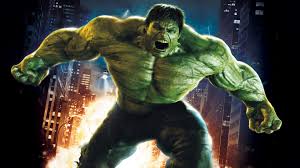
The HulkWe picture this most obviously in fighting.  Today’s most iconic image is probably that of the Hulk, from Marvel Comics, who changes from mild-mannered Bruce Banner to a massive powerhouse when Banner gets angry.  The idea isn’t new to comics, of course; it goes back at least to the Norse berserker, who fights in what Wikipedia calls “a trance-like fury.”  In a more mundane case, we see the milquetoast George McFly motivated by anger at a threat to the girl of his dreams when he finally decks Biff in “Back to the Future.”

But we also see passion as the path to other kinds of achievement.  Great stress, suffering, or effort leads to a breakthrough in ability.  Jean Grey of the X-Men becomes the cosmic-powered Phoenix when her power and endurance are tested to the limit piloting a space shuttle through a solar flare.

Gully Foyle achieves a previously-impossible interplanetary teleportation (“jaunte”) when he’s at the end of his rope in the SF classic The Stars, My Destination.  Roger Zelazny’s hero Corwin recovers his memory and his full powers when he effortfully “walks the Pattern” in Nine Princes in Amber:

          It was agony to move.  Everything tried to beat me aside.  The waters were cold, then boiling.  It seemed that they constantly pushed against me.  I struggled, putting one foot before the other.

In Julian May’s Saga of Pliocene Exile, the tormented Felice Landry achieves new levels of power under extreme stress (The Golden Torc, part III, ch. 3).  On a more positive note, the coda of E.E. Smith’s Lensman series shows Clarissa MacDougall, intensely suffering the loss of her beloved, finding the power necessary to retrieve him from unimaginable reaches (that chapter is a trope namer for TV Tropes’ “The Power of Love”).  Just last night, I saw the movie version of Wonder Woman (excellent, by the way) use the same trope:  a climactic accession of power under immense emotional strain.

Some of the modern roots of the passionate effort concept can be found in the Romantic movement.

Dispassion Also Has Its Points

But there’s a more paradoxical view that we can achieve more when we stop concentrating and enter a state of calmness or centeredness.

This approach also has many roots.  We’re frequently advised, when struggling with a difficult task, that we’re “trying too hard.”  Zen and other Asiatic traditions mobilize a strategy of detaching one’s mind from too great a concentration.  The currently popular practice of “mindfulness” seems to partake of the same idea:  a focus on the present moment without worry or intense concern.  Wikipedia even refers to “choiceless awareness,”  “the state of unpremeditated, complete awareness of the present without preference, effort, or compulsion.”

A nonpassionate sense of focus also appears in F&SF as a way to great achievement, though it’s much more rare.  In Robert Jordan’s massive fantasy epic The Wheel of Time, for example, Rand al’Thor is receiving sword training from a mentor who recommends “[n]ot the wild leaping about and slashing that Rand had in mind . . . but smooth motions, one flowing into another, almost a dance.”

“ . . . Blank your mind, sheepherder.  Empty it of hate or fear, of everything.  Burn them away. . . .”

Rand stared at him.  “The flame and the void,” he said wonderingly.  “That’s what you mean, isn’t it?  My father taught me about that.”  (The Eye of the World, ch. 13, paperback p. 177)

It’s through “the Void” that Rand can be most effective with the sword—and, later, with other things.

Honor Harrington faces the duelDavid Weber’s military SF heroine Honor Harrington, after surviving a shuttle explosion and emotional trauma, faced with a ritual duel to the death, dramatically decapitates her opponent with a single stroke.  But she doesn’t do it in a burst of rage, well-justified as that would be.

Honor waited, poised and still, centered physically and mentally, her eyes watching every part of [her opponent’s] body without focusing on any.  She felt his frustration, but it was as distant and unimportant as the ache of her broken ribs.  She simply waited—and then, suddenly, she moved.  (Flag in Exile, ch. 29, paperback p. 376)

We might also compare Frozen, from a previous post.  Elsa gains full control over her powers not when she lashes out passionately, nor when she painfully restrains herself, but when her power flows freely and gladly.

It’s hard to specify exactly what this dis-passionate state is.  It’s not pure rationality, à la Mr. Spock.  We might consider it a sort of pure will; but it’s not a blind will creating its own goal à la Nietzsche.  What you’re seeking still matters greatly; this Void state is how you approach it.

Nor is it lack of restraint, as we saw with Frozen.  Rather, the mindful actor seems to have perfect direction, perfect control, by means of this very Void state.  The arrow goes straight to the target—but it strikes with unparalleled force.

We don’t see as many examples of such centered intensity in the movies.  Film tends to prefer the display of passion:  it’s showier.  A character whose action arises from an inner balance is likely to look entirely inert, from the outside—until she moves.

Convergence

What these two approaches have in common, maybe, is wholeheartedness.  This seems to be the point of Yoda’s famous advice:  “Do, or do not; there is no try.”  Mr. Miyagi says something very similar to Daniel in The Karate Kid (at about 0:54).

The best modern description of a condition in which complete involvement in an action combines calm with wholehearted dedication may be “flow state.”  Most of us have probably experienced this ourselves.  There’s a certain detachment; yet there’s also deep involvement.  Emotion doesn’t get in the way, but the activity itself involves a sort of ecstasy (which, etymologically, means ‘standing outside oneself’).  Note that the berserker was described above as possessing (or possessed by) a “trance-like fury.”

In other words, the two paths may converge in the end, where maximum emotion is wholly embodied in or transmuted into the act.  None of that energy is wasted on subsidiary symptoms or mechanisms like straining, sweating, grimacing, screaming.


The way we approach these two paths affects how we tell a story.  Depending on our hero, and the hero’s personality or way of life, we may depict the climax as the moment of greatest strain or passion, or as a great achievement in a moment of crucial calm—“the still point of the turning world.”

If we’re simply living life—dancing, singing, coding, negotiating, loving—this may be good advice as well.  The way to do our best may not be to strain every sinew, but to relax and center.  Or possibly both.

Guest Blog: Solstice Publishing contest for Plots and Schemes Vol. 1

Solstice, which published my short stories Rescue Redux and The Green Song, is holding a contest to give away copies of a new anthology, Plots and Schemes Vol. 1.  Here are the details!


Solstice book giveaway bannerEnter to win!  That’s all you have to do.  Solstice Publishing is celebrating Plots & Schemes Vol. 1 becoming a best seller in Germany during its release by giving away three autographed copies of the print edition of this fabulous anthology.

https://www.goodreads.com/giveaway/show/237966-plots-schemes-vol-1

All you have to do is click on the Goodreads link between May 26 and June 9 and enter.  It’s that simple.  Once the contest ends, Goodreads will notify us of the winners’ names and you will receive your copy.
Plots and Schemes Vol. 1 cover
Her child vanishes in a puff of smoke
When murder is on the itinerary
An eavesdropped comment leads to an impossible scheme
Mysterious events pull Dana into danger
A rock star’s murder leaves Emlyn Goode questioning everything she knows about herself
Murder most foul puts this cop to the test
One murder, one plan, two possible outcomes
Losing your mind is scary…
If you’re not at the beach, the Tough Luck stories will take you there
Trail Town Texas leans heavily on their sheriff
Murder, kidnapping, mysterious events, and more are our treat to you in this wonderful anthology from Solstice Publishing.  Discover the talents of K.C. Sprayberry, Debbie De Louise, Donna Alice Patton, E.B. Sullivan, Susan Lynn Solomon, Johnny Gunn, K.A. Meng, Leah Hamrick, Lois Crockett, and Stephy Smith.

https://bookgoodies.com/a/B072L7KZ6K

Here’s a little taste of what you’ll find inside this intriguing book!

A smile was on his face. Despite the fact that he was supposed to connect with the egg donor of this lovely child, he had no thoughts of doing that or returning the kid at the appointed time. His timing was perfect. The child—Lanie is such an idiotic name; I’ll have to come up with another one—would be five in a few days. In time, she would forget there had been his loser ex in her life. She—Sheila will regret divorcing me—had battered through his training, all he’d gone through to make her a compliant and complacent wife. She’d run away after he ordered her to get an abortion.

Good thing the bitch ignored me. I wouldn’t have this gorgeous child to raise to be like me.

Granted the child was weak now, but he would fix that, as soon as he made sure they vanished forever. No one would stop him from raising his daughter as he saw fit, and that meant keeping her away from her weakling of a mother.

Quietly, Mark Jannson, scion of the globally famous Jannson family, whose assets numbered in the billions, removed anything he considered important from his lavishly furnished thirty-room mansion located in the mountains above Denver. His mother’s jewels were carefully packed into a leather satchel, to be given to his daughter, if she remained true to the Jannson name. The woman who called herself his mother had been consigned to a hovel in the southeast somewhere, once she showed her true colors by attempting to take him from his father.

“Let the bitch live in poverty the rest of her life,” he whispered.

https://youtu.be/3xUn1SZZrF8
Starting May 26, 2017, simply click on the link provided and enter. If you aren’t a member of Goodreads, you can join easily. This is a great place to discover books by new and exciting authors and be in on the fun of all sorts of entertainment!