Introduction
One of the advantages of introducing my wife Geraldine to Lois McMaster Bujold’s Vorkosigan saga – as well as her Sharing Knife series (both in audiobook form) – has been the opportunity to think further about everything these stories bring up. Revisiting these favorite fictional haunts may be particularly illuminating when we do it in an alternate format, with an audio narrator contributing to our perception of the story along with the text. It’s often said that authors should read their own writings aloud, because we catch different things that way than by simply reading them in print; and the same may be true of another author’s works.
One of the continuing themes of the Vorkosigan series is the role of personal connections in government. Our principal protagonist, Miles Vorkosigan, is the son of a Count in the Barrayaran interplanetary empire, limited in extent (three planets) but headed by an Emperor. In a quasi-feudal setup of this sort, even one that’s gradually developing in a more democratic direction as on Barrayar, aristocrats have certain privileges, and the Emperor has quite extensive powers. The system is held together by essentially personal relationships. The Counts have their authority through oaths to the Emperor, and some members of their households, such as “armsmen,” swear similar individual oaths to the Counts.
Cutting Through the Red Tape

At one point in Miles’s rather irregular career, Emperor Gregor appoints him an “Imperial Auditor.” These Auditors are the Emperor’s elite troubleshooters: their activities reach far beyond financial audits, although Bujold does trace the term back to financial roles (and indeed tells us that the “Counts” were originally the Emperor’s accountants, deputized to ensure taxes were properly paid). At the time of the stories, an Imperial Auditor speaks with the Emperor’s Voice and thus has almost unlimited authority – although one summary notes that “most subjects endowed with their superior’s Voice tended to be circumspect about its power.”
Miles’s actions bear this out. He doesn’t use his Auditorial authority for his own benefit; he uses it to carry out necessary investigations and organize the empire’s officials and staff for necessary actions. The overriding delegated authority of the Emperor allows things to move faster than normal bureaucratic procedures would allow.

In addition, Miles uses his authority to override the usual procedures in the name of mercy or decency. In a notable example, one Madame Radovas, the widow of a scientist who had just resigned from government service, asks whether she will receive the normal survivor’s benefits. The rules say that she isn’t eligible, since her late husband had resigned before his death. Miles, however, makes an exception. “Gregor does not approve of widows being left destitute. Trust me on this one. Vorsoisson, go ahead and run the benefits through for her anyway.” Komarr (1998), (ch. 6, pp. 117-118)
Our sympathies are all with Miles in this case. Even though Madame Radovas actually turns out to be one of the bad guys eventually, the reader enjoys the way Miles has cut through the red tape to achieve a more merciful result than the regular rules would allow. He’s using his peculiar power for a good purpose.
An even more dramatic example occurs in the following volume. In one of my favorite scenes, the Emperor himself intervenes at the request of a young boy, who (with his mother) is trying to resist being taken away and placed under the care of a well-meaning but misguided relative. The law might arguably be on the relative’s side, at least for the moment, but Emperor Gregor can suspend this transfer of custody until things work themselves out. We are delighted by the consternation and embarrassment of the misguided relatives because we, the readers, have the privileged position of knowing that Gregor is in fact making things right. (A Civil Campaign (1999), ch. 18-19, pp. 462, 476)
Most of us get a kick out of seeing some sympathetic character bypass the rules to get the right thing done, whether it’s the “maverick cop who doesn’t play by the rules” (as my children learned to recite the cliché) or the super-hero who operates outside the usual constraints. But this only works because we agree with the end result. If the characters with special privileges or abilities were using them to make things worse, our reaction would be exactly the opposite: outrage that someone was bending the rules for personal gain or for evil ends.
The Obligations of Power
The old French expression noblesse oblige (literally, “nobility obliges”) captures an idea that has been in play throughout human history: as the Wikipedia page puts it, “nobility extends beyond mere entitlement, requiring people who hold such status to fulfill social responsibilities.”
Even in the traditional feudal system, obligations actually run both ways: lords have obligations to their vassals, reciprocating the vassals’ obligations to their lord. We see this in the Vorkosigan saga: for example, early in the series Miles takes a man’s oath as an armsman to protect the man in question, rather than to reduce him to servitude. (The Warrior’s Apprentice (1986), ch. 5)
But noblesse oblige extends beyond this. It carries the sense that the more powerful are especially required to use their powers rightly, even dutifully. It stands in opposition to the notion that might makes right – that it’s okay to do whatever you can get away with or force others to accept.
The concept ties in with the Biblical notion that the purpose of a ruler is to serve, not to dominate (Matt. 20:25-28). Or, as it’s put in another quasi-feudal science fiction setting, David Weber’s Dahak series: the protagonist’s children are to gain “[t]he knowledge that power is a responsibility. The belief that who they are and what they do is as important as what they’re born to. A tradition of – well, of service.” (Heirs of Empire (1996), ch. 5, p. 60)

This formulation reminds us that the concept isn’t limited to an aristocracy. It applies to anyone with power of any sort. The modern version (for us commoners) is the tagline we associate today with Spider-Man: “with great power comes great responsibility.” Or, in more traditional language: “Much will be required of the person entrusted with much.” (Luke 12:48)
Virtue and Power
We trust someone to cut across the rules, then, when we’re confident they will do the right thing. For an aristocrat, we want them to have that sense of noblesse oblige. If we’re going to have aristocrats, we need virtuous aristocrats.
The Bujold examples above work because we trust Miles and his circle to do the right things with their power. This isn’t a given. Even on Barrayar, those in charge haven’t always been virtuous. “Mad Emperor Yuri,” a generation earlier, is frequently cited in the stories. And Gregor’s father, Prince Serg, is shown in the early stories as a sadist willing to violate the rules on treatment of prisoners for his own enjoyment. Even Emperor Ezar Vorbarra, who overthrew Yuri, behaves high-handedly (for example, inserting an experimental memory chip in a lieutenant more or less to see what would happen). The admirable practice of governance currently in effect is quite recent.
History, as well as fiction, teach us that aristocrats are likely to abuse their privileges. It may take exceptional people to turn that natural tendency in the right direction. In the Vorkosigan history, the relatively benign situation we encounter in most of the series owes a great deal to the positive influence of Miles’s parents, Aral and Cordelia Vorkosigan. In particular, Aral was the regent for Emperor Gregor during his formative years. But we can also see such influence, direct or indirect, on others, such as Ivan Vorpatril and Simon Illyan. (If I’m drowning you in obscure references to a series you haven’t yet read, please accept my apologies – then go ahead and read the stories, they’re worth it.)
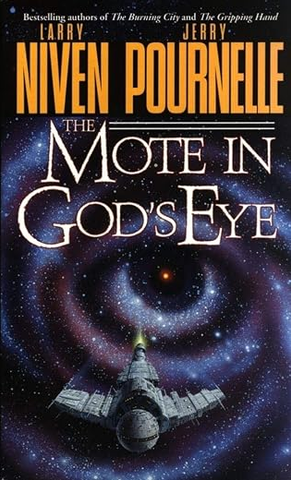
To take the case of a different interstellar empire, Larry Niven and Jerry Pournelle’s The Mote in God’s Eye (1974) gives us starship captain Rod Blaine, who is frequently annoyed by his irreverent sailing master Kevin Renner. Like Miles, Rod is dedicated to doing the right thing. Renner is happy to indulge in digs at the Empire’s aristocracy, but when push comes to shove, he admits that even he depends on the governing class to be the kind of people who can be trusted: “Hell, Captain, it’s because of guys like you that I can accept the aristocracy—” (ch. 40, p. 341)
Of course, it’s easier to ensure this in fiction than in real life. An author can arrange for good people to be in charge, people who understand their responsibilities. In actual practice, it’s harder to distinguish the responsible from the irresponsible, or to prevent the latter from gaining power. We can choose whether to write a utopia, a dystopia, or something in between; but more is needed to stave off the real-life drift toward dystopia.
Virtue and Wisdom
Even the best of intentions are not enough. Rules, even those we stigmatize as “red tape,” are generally made for a reason; thus ignoring them will often lead to unfortunate consequences. It takes unusual perceptiveness and wisdom to recognize the exceptional cases when the rules should be ignored. We trust Miles not only because he’s a good man, but also because he’s incredibly smart – which is why we enjoy watching him get himself into untenable situations and then frantically improvise his way out of them.
What is true of an aristocracy – hereditary leaders – is more broadly true of any leaders. We need them to be people of both good will and good judgment. Thus, for example, an article last year by Fareed Zakaria notes the need, in a non-aristocratic society, for “expanding access to education and networks so that mobility is real, while cultivating leaders who can see beyond their class and credentials. The problem is not that elites exist but that they have grown detached.” (emphasis added) We want anyone with power to have learned Spidey’s lesson about acting responsibly.
The themes we’re investigating here thus converge with those of some earlier posts. They generalize the concept of “the Good King” and further articulate the notion of the rule of law. As the latter post pointed out, we need good people as well as sound laws. “Good men can make poor laws workable; poor men will wreak havoc with good laws” (James M. Landis, 1960; see this article at 432 & n.107).
The lead character in a Harry Turtledove novel used to ask herself when in difficulties: what would Miles Vorkosigan do? If we are in a position to exercise any power or authority, we can certainly imitate Miles in one respect – in cultivating a sense of noblesse oblige. Any of us may be called upon to be a leader at times; we should be prepared to be the right kind of leader.