A Slice of Meaningful Life

The Dutch House Poses a Question
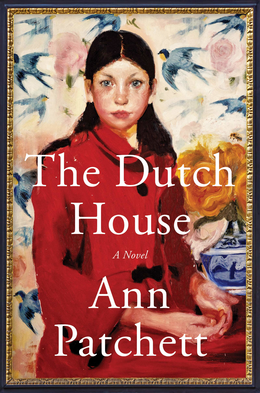
The Dutch House, cover

I now have a long commute two days a week—an hour minimum, more often 1¼ to 1½ hours—and this has given me an opportunity to start listening to audiobooks again.  At my wife’s recommendation, I used the very useful Libby app to download a 2019 novel by Ann Patchett, The Dutch House.  She had picked that one in part because the audiobook was read by Tom Hanks, who has a very agreeable voice.

It was an unusual pick for me.  Much of my reading belongs to a few key genres:  science fiction, fantasy, romance.  The Dutch House belongs to that particular genre of contemporary writing that is often referred to as “mainstream” literature.  While I don’t abhor mainstream fiction, it doesn’t often catch my attention.

I very much enjoyed this story, however.  When you find yourself looking for an excuse to keep listening to the audiobook even once you get out of your car, that’s significant.  The Dutch House made my commute considerably more enjoyable for the nine hours and 53 minutes it lasted.  At the end, I felt that satisfaction and pleasure that comes when you’ve had a genuinely significant experience.

And that’s what poses the question.  Because The Dutch House shares with much other mainstream fiction the characteristics that are sometimes referred to as “slice of life.”  In particular, it doesn’t have much of a conclusion.  The main characters meander along from childhood to about their mid-40s, and then the book stops.  Plenty of interesting things happen along the way, the characters are well-drawn and fascinating, the scenes are vivid.  But it doesn’t go anywhere.

Now, I generally prefer a story with a solid, clear climax and conclusion.  So why did I enjoy this so much?  Thinking about this led me to a bit of an epiphany about what’s appealing in fiction.  While my own experience may be personal and idiosyncratic, my tastes are similar enough to lots of others’ that my ruminations may be of some more general applicability.

Since I need to point to a few specific things about Patchett’s story, I’ll issue a

Spoiler Alert!

Genre and Plot

In the non-mainstream genres I mentioned above, there tends to be a plot.  There’s a beginning, a middle, and an end.  The concerns of the characters come to a head at some point, and some kind of resolution is achieved.  We can point to something that happened in the story, whether it is on the whole good, bad, or indifferent.

Now this is by no means universally true.  Plenty of science fiction stories meander about without reaching a compelling conclusion.  And there are some that do more to explore a mood than to tell a story.  But there’s a tendency for the characters to get somewhere, whether or not it’s a place they wanted to be.  And the types of SF that lack a conclusion are generally those that are deliberately trying to imitate mainstream fiction—to gain the greater cachet or respect accorded to Real Literature, for example.

This is even more true in other genres.  A genre romance will have a happy ending, whether it’s “happily ever after” or merely “happy for now.”  In a murder mystery, a killer is going to be unmasked at the end.  Of course not every tale in real life ends this way; for one thing, people continue living after a given story has “ended.”  But we can regard these genres as specializing in the subset of stories in which some portion of a person’s life can be marked off and form a satisfying tale that embodies a plot arc.

Plot and Achievement

Personally, I like a story in which something significant is achieved.  It might be a really big thing:  saving the world, bringing order to the galaxy, eliminating a Dark Lord.  Or it might be something small and intimate:  a love story, for example.  It may be solely a matter of inner illumination, or, in certain kinds of tragedy, the demonstration of a tragic flaw.  But the kind of plot we’re discussing is one that leads to a conclusion in which things are significantly different than they were at the beginning.

But theory must be shaped by experience.  If my tentative generalization says I like a story only when something definite is achieved, then my enjoyment of a story that’s inconclusive is contrary evidence.  In The Dutch House, while various characters realize and achieve certain things, there’s no overall resolution by the end.  The several romances in the novel all fail.  The main character, Danny, doesn’t really resolve his difficult relationships with his parents.  No final judgment is suggested as to whether his mother, who left her children years ago to help the poor, is a saint or an irresponsible quitter.  Many of the characters are likable and intriguing, but there isn’t precisely a hero or heroes.  (A villain, perhaps, but since she’s subject to dementia and becomes an object of care in the latter part, there’s no viscerally satisfying comeuppance to be found.)

And yet, it’s a really good story.  So what is it that I’m enjoying so much?

Significant Parts

I think it may be that the individual events in the story seem to matter, even if they don’t systematically lead anywhere.  This is not the kind of mainstream novel in which people muddle around and leave the reader with a sense that it’s all been meaningless at the end.  On the contrary:  one feels that what these characters go through is important in some way.

It’s notoriously difficult to define exactly what “meaning,” in this sense, actually means.  But whatever it is, the people and events in Patchett’s story have it.  The good things that they do and experience serve to mitigate the bad things, and sometimes even make up for them.  The events are presented as significant, even if they don’t rise to a marked climax.

Making the story meaningful in this way is a choice and an achievement, not a given.  When there’s no clear plot arc in a story, it’s easy for the individual events to start seeming absurd.  “Life’s a bitch and then you die.”  But a good writer can ensure that meaning leaks through, as it were, throughout the story.  There may be a hint of the same thought in an observation of Anne Lamott’s:  “the purpose of most great writing seems to be to reveal in an ethical light who we are.”  (Bird by Bird, Part Two, chapter 2, p. 104.)

So if my earlier thesis was that a good story is one in which something significant has been achieved, I need to modify it to include slice-of-life stories in which lives are shown to be meaningful.

(In)Conclusion

This essay itself is rather inconclusive.  My ruminations on what makes for a good story are tentative and still incomplete.  And I may merely be stating what’s obvious to readers who (so to speak) come from the opposite starting point:  of course slice-of-life stories are meaningful, you bozo, what ever made you think otherwise?  But it does seem to be an essential element in figuring out what makes for good storytelling.
The Amateur Hero

At the end of the previous post, we noted that, depending on the kind of story authors want to tell, they may choose to deploy either a professional hero—someone whose job it is to face perils and challenges, like a military officer or police officer—or, on the other hand, someone who is dragged unwillingly or unexpectedly into a crisis.  But I didn’t actually say much about how that difference plays out in a story.  This post, then, is a kind of afterthought to the last one.

“You Are Not Prepared”

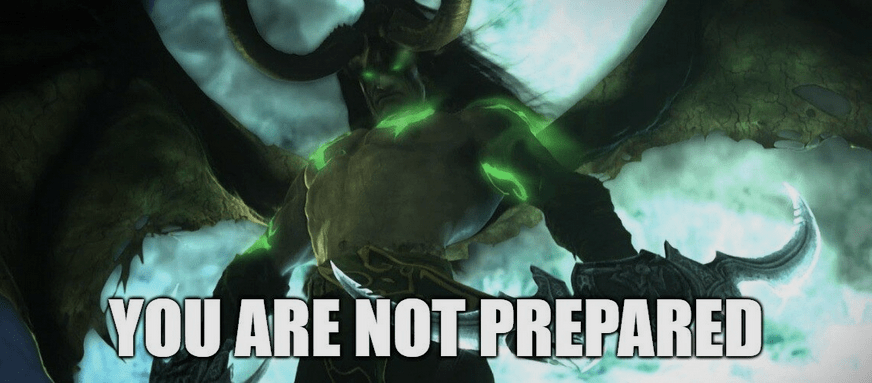
The first expansion for the online game World of Warcraft greeted players with the ominous declaration, “You Are Not Prepared.”  That’s exactly the situation of the individual who didn’t expect to be called upon to be a hero.  The lack of preparation may manifest itself in several ways, any of which can help to shape the story.

Competence.  The main character (MC) may lack the skills or expertise to deal with the kind of crisis that’s occurring.  Maybe there’s fighting involved, and the MC isn’t skilled with fists or swords or rayguns or whatever the weapon of choice happens to be.  It’s a lot easier if they do happen to have the pre-existing skill:  Glory Road’s Oscar, for example, was already experienced at fencing.  If they don’t, then one can expect an extended period of training, since this sort of skill isn’t one that can be picked up in a day.  Luke’s training montage in The Empire Strikes Back is a classic example, taking him from someone with potential and the occasional burst of unexpected powers (“Use the Force, Luke”) to someone who can face off against Darth Vader at the end of Empire and present himself as a full-fledged Jedi Knight at the beginning of the sequel.

Information.  The amateur hero may be drawn into an environment where they aren’t familiar with the geography, the factions, the customs, the people and powers.  In Anne McCaffrey’s Restoree, for example, the heroine is kidnapped by aliens, then rescued by others, all in an unconscious state, and “comes out of it” to find herself in a thoroughly incomprehensible situation.  Glory Road reflects the same struggle by a MC to cope with an unfamiliar environment, though in this case the hero has all the assistance one could desire in learning to deal with the new circumstances.

The same kind of thing occurs in the classic fantasy trope where MCs from a backwater locale are sent into a wider world with which they’re only vaguely acquainted, as in The Lord of the Rings or The Wheel of Time.  One of the advantages of this setup is that the MCs will need to have many things explained to them by more knowledgeable characters; they are the “ignorant interlocutors” whose presence is so convenient for exposition.

Even in more mundane cases, the MC may be placed in conditions where they don’t know their way around.  The eponymous TV series hero Chuck Bartowski is suddenly pitched into the world of intelligence operations and secret agents; he and other characters spend much of the first three seasons learning the ropes.  In a similar way, but much faster (in a two-hour movie rather than a long-running series), the hero of Hitchcock’s North by Northwest must learn the players and the goals of the spy game into which he has been drawn.

Confidence and maturity.  The MC may also be personally unprepared to deal with the crisis posed by the plot.  My favorite example is Romancing the Stone, in which the shy, introverted heroine suddenly has to travel far from home, ally with an unexpected stranger, fight her way through a jungle, and match wits with smugglers and thugs.  Much of the fun of the story is in watching the ironically-named Joan Wilder gain in courage and self-reliance as she overcomes these progressively more dramatic challenges.

Other aspects.  The MC may be unprepared in other respects.  The elemental fact of facing death will be a shock to those of us brought up in more placid situations.  The hero may lack equipment or resources to deal with the new challenges—or, conversely, may happen to have exactly the right resources available; this may actually bring about the adventure, as with the spacesuit in Heinlein’s Have Spacesuit, Will Travel.  Moreover, the homebody hero probably has not yet come to terms with the degree to which the adventure might impact family or personal connections—unlike the hero-by-trade, who has probably reconciled spouse or family with a dangerous career.

The Character Arc

The need to cope with such challenges almost automatically sets up an arc of character development for the MC, reflected in the examples above.  The MC can be expected to grow in confidence and independence.  They may also be tempered by tragedy or suffering; this is the primary course for the young graduate-school characters in Gay Gavriel Kay’s Fionavar Tapestry.

The developing hero may become more street-savvy, more knowledgeable in the ways of the world.  This sort of practical wisdom is a common theme, given the age of the characters, in young adult-targeted stories or the bildungsroman.  For example, Rod Taylor, the MC of Heinlein’s young adult novel Tunnel in the Sky, becomes the informal leader of a band of marooned students by a gradual process.  A group of older students, schooled in political theory and more alert to how groups can be manipulated, ease him out and take over control—with the best of intentions, to be sure.  By the end of the story Rod, once again in command, has become a bit more canny in dealing with the group.  In a similar way, Don Harvey in Between Planets starts out as a fairly naïve high-schooler who learns some hard lessons about political realities as he becomes embroiled in an interplanetary revolution.

Finally, if the MC learns new skills or abilities in the course of the story, they will have grown in that respect too.  The new abilities may qualify the MC for new roles or positions, and perhaps to actually become a professional hero in the end.  We see this in superhero origin stories, where a MC is initially unskilled in managing their superpowers, but gradually takes on the role of a professional do-gooder.  Spider-Man is the classic example, a teenager who didn’t expect to become super-powered and takes a while to become used to his new potential; unlike, say, Iron Man or the Fantastic Four, who start out as grownups and adapt fairly quickly.

As we saw in the last post, an amateur hero almost by definition rises to the occasion.  This is a sufficiently satisfying theme that I suspect adventure stories may tend more to this approach than to that of the professional hero—though I haven’t attempted to take a count.

The Professional Hero

Glory Road

A couple of comments by Kevin Wade Johnson in connection with my last blog post (now a long way back!) triggered a line of thought about heroes and the hero business.

Glory Road cover

Robert A. Heinlein’s 1963 novel Glory Road looks like a swashbuckling fantasy at first blush, but it turns into something entirely different.  Our hero, E.C. “Oscar” Gordon, kicking around the world after leaving the military, is recruited by an incredibly gorgeous woman to assist her with a quest that involves traveling to other universes and swordfighting.  This is just the kind of adventure he was craving.

As Kevin observes, the first three-quarters of the book are action-adventure, with sizable side dishes of comedy, scandalous liaisons, and cynical social commentary.  At that point the quest is fully resolved—at page 208 out of 288, in my copy.  What, then, occupies the rest of the book?

Gordon returns with “Star,” the beautiful woman he’s now married, to her home universe.  It turns out she’s the empress of a multiuniversal polity that is in some respects a high-tech Utopia.  All Gordon has to do is relax, allow himself to be fêted by the population, and sleep with anyone he finds interesting (the late Heinlein’s polyamory is fully on display here).

He hates it.

What Utopia doesn’t satisfy is Gordon’s lust for adventure.  He doesn’t want to be a dilettante or a “kept man.”  He wants wonder, excitement, the stimulus of danger.  He likes being a hero, with all the occasional discomforts and perils of that role. The placid happy ending of a retired hero holds no attraction for Gordon.

It’s unclear whether Star feels the same way.  She’s willing to consider going in on a kind of adventuring “business” with her slightly tarnished knight.  But first, she says, she’d have to train a replacement for her unique position—and that would take many years.

The solution is for Gordon to head off again on the Glory Road without Star.  He’ll pop back in now and then, but not to take up residence in the Twenty Universes utopia on a permanent basis.  He and Star will remain in love with each other, perhaps, in some sense of the term—but not in a sense that requires fidelity on either’s part.  In Heinlein’s polyamorous world-view, passing romantic involvements are just part of the adventure:  “Knights errant spend their nights erring” (p. 271).  Gordon’s happy ending is the continuing adventure.

The Unsettled Adventurer

This idea comes up from time to time in adventure stories:  the hero (or heroine) who seeks out danger and isn’t content without it.  John Carter of Mars displays a little of this, though in the violent world of Barsoom, he seems to be able to get his fill of trouble while still remaining home-based with the enthralling Dejah Thoris in her city of Helium.  There’s something like this idea in the conclusion of The Good Place—boredom with utopia—as we’ve seen.

The really extreme case can be found in an old-time fantasy by E.R. Eddison, The Worm Ouroboros (1922).  The swashbuckling nobles of Eddison’s imagined world fight the good fight against their sinister enemies, the Witchlanders.  At the end of the novel, those adversaries are conclusively defeated.  Cue the victory feast.  And yet . . . Our Heroes are not quite satisfied.  Things just won’t be as interesting without the Witchlanders constantly scheming and warring against them.  At the very end, the heroes’ fanciful wish is somehow granted:  a herald announces the arrival of an emissary from the bad guys—the same event with which the novel opened.  (Hence the title:  the legendary serpent that swallows its own tail.)

The Series Protagonist

I’ve previously expressed some doubts about whether happy endings really need to be static and boring—so let’s not adopt the Glory Road doctrine too hastily.  (In its extreme form, Eddison’s circular epic, one may feel the opposite dissatisfaction in the sense that all the heroes’ striving and suffering has been for nothing.)  But these examples highlight a difference among types of action heroes.

In a long-running action series, unless a hero is improbably falling into one adventure after another against their will, we have to assume that the hero likes what they’re doing.  James Bond seems to be pretty content with his secret-agent life.  Indiana Jones yearns for opportunities to climb out the window of his stuffy professorial office and strike out on some treasure-hunting chase—even at an advanced age, as we’ve recently seen.  Captain Kirk, who’d been promoted to admiral by the beginning of Star Trek II, isn’t suited for a desk job.  At the end of the three-movie cycle he’s demoted to captain again—ostensibly as a punishment for flagrant violations of Starfleet regs, but we’re to see this as a step forward for him, his best destiny.  Yoda accuses Luke of this kind of unrest in The Empire Strikes Back:  “Adventure! Excitement!  A Jedi craves not these things.”

The same is true of almost all superheroes.  Retirement is almost unheard-of.  The occasional counter-example makes for an interesting tale precisely because it runs against type:  Hank Pym in the Marvel Cinematic Universe, Jack-in-the-Box in Astro City.  In a somewhat similar way, continuing campaigns in Dungeons & Dragons or similar games tend to assume the existence of a class of professional adventurers who enter willingly into a life of battle and treasure-hunting, as distinct from an assembled-for-one-purpose group like the Fellowship of the Ring.

This character trait does make things convenient for the writers.  They have a believable rationale for the main character’s continuing adventures.  Otherwise, after a while it would start to seem implausible for one person to keep getting drawn into danger purely by accident.

The Hero By Trade

The Star Trek captains, and other officers, illustrate a type of case where the character really is a professional hero—one who’s taken up a profession or vocation where danger and challenge, and hence the opportunity for heroism, come with the territory.  Anyone pursuing a military or quasi-military career fills that bill.  Honor Harrington, for example, reflects more than once that she’s good at war; it’s her calling, what she was born to do.  Professional police officers, firefighters, or rescue workers—first responders generally—also fall into this category.  (John McClane of Die Hard fame, mentioned above, is in a danger-prone profession, though it’s probably rare for a cop to run into the kinds of major crises he does.)  Unsung heroes like medical personnel may find themselves in the same position.  They may not categorize what they’re doing as heroism (it looks better on them if they don’t); but they are putting themselves “in harm’s way” where acts of heroism are constantly called for.

This is why military SF lends itself so easily to long-running series like Honor Harrington’s.  (The same is true outside the SF genres, as we can see, for example, in Patrick O’Brian’s Aubrey/Maturin sea stories.)  The same is true of private detectives, secret agents, and the like.

The Reluctant Hero

But not all heroes are professional heroes.  An equally perennial favorite is the reluctant or accidental hero—the person who answers the call to adventure, but does wish to return to a peaceful life afterward.

Jim Butcher’s Introduction to Jim Butcher & Kerrie L. Hughes, Heroic Hearts (NY:  Ace Books, 2022), puts it this way:

Real heroes . . . [are] the everyday humans who happen to be standing there when something bad happens, and when there is a sudden need for skill, courage, or intelligence.  They’re the regular people in irregular circumstances who find themselves considering others first and standing up to do whatever needs to be done.”  (p. xi)

Some do manage to go back to their ordinary lives after the crisis has passed.  Cincinnatus, and George Washington, are famous for pulling off the transition:  they took over the reins of the state when they had to, but willingly ceded power afterwards.  On a more modest scale, the “citizen soldier” concept, as in the American National Guard, aims at the same thing.  It’s part of the mystique of the American World War II armies, the so-called “Greatest Generation” model.  You rise up to serve when necessary, but happily return to civilian life when it’s done.  Contemporary discussions are more likely to emphasize post-traumatic stress disorder (PTSD) and the difficulty of the return to civilian life; but it remains an ideal with considerable drawing power.

In fiction, the contrast between heroic acts and ordinary life provides rich soil in which to grow interesting stories and characters.  Tolkien, for example, gives us some characters who do manage the return to everyday existence—Sam Gamgee—and others who find it impossible, such as Frodo.  Of course Frodo does in the end find peace in Valinor, but that requires a literal removal from the circles of the world, a transcendence not available to the average hobbit-in-the-street. 

The situations can become fairly complex.  In the Song of Roland, after the heroic deeds of the story are finished, a weary Charlemagne at the end finds himself called back unwillingly to new conflicts.  In the TV series Chuck, the eponymous Chuck Bartowski is initially appalled to find himself embroiled in spy activities, but the sheer coolness of it all grows on him, and by the fifth season he wants to start his own secret-agent business.  Scott Lang (Ant-Man) at the beginning of Quantumania is resting comfortably on his laurels, and has to be dragged back into action in the name of helping others.

Detectives in mystery stories fall into both camps.  We have professional private eyes like Sherlock Holmes and Nero Wolfe.  But then we also have amateurs like Chesterton’s Father Brown and Agatha Christie’s Miss Marple, who always just seem to be in the right place at the right time.

The Author’s Choice

If we want to write a heroic adventure story, one of the early decisions we have to make is what kind of hero we want to feature.  Sometimes the tale may call for someone who’s automatically in a position to encounter danger, like a military officer.  Sometimes we may prefer to drag the hero into action against their wishes, or by happenstance.  The whole point of Roger Thornhill’s predicament in North by Northwest, for example, is that he has no desire to become involved in skulduggery and is baffled by the strange things that are happening to him.  Like so many other accidental heroes, however, he rises to the occasion.  This is a narrative arc that may be both more interesting and more inspiring than that of the professional hero; because most of us live relatively ordinary lives and can only hope that if called upon, we too could become the kind of hero we admire.

Finding the Plot

Getting Started

When we start reading a story (or watching one), we usually have some idea what it’s about.  Chances are we picked it up based on a back-cover blurb or advertisement, or a review.  But the blurbs and ads are often “teasers,” aimed at drawing us in and getting us to start the story.  They may not really tell us where the plot is headed.

The genre may also give us a clue.  If the tale is presented as a mystery, we expect a crime (generally a murder) which will be solved.  If it’s a thriller or action epic, we’re prepared for physical challenges and victories.  In a romance, we anticipate a successful love affair.  But the details are unknown.  And in stories without a strong genre identification, we may be less sure about where the story is going.

James Bond dives from an airplane

Consider the James Bond movies.  Typically the film opens with an action sequence that may have little to do with the main plot.  We can get quite a few minutes into the film before we know what the real plot is.  There’s no danger of deterring us from watching; we all know what a James Bond story is like—that’s why we’re there.  The action sequence is merely a genre-appropriate appetizer while we wait to get into the main story.

What I’m interested in here is the reader’s developing sense of what the main action or conflict is:  what goings-on will make up the main business of the story.  It’s not as intangible as the theme or “meaning” of the tale.  It’s more concrete than that:  the overall shape of the plot.

Sequential Plots

Some stories start out with one kind of plot, morph into another, and then take off in a third direction.  This can result in a certain amount of reader whiplash, though an adroit author can carry it off.  She may even gain points for taking the reader on a ride through unexpected twists and turns.

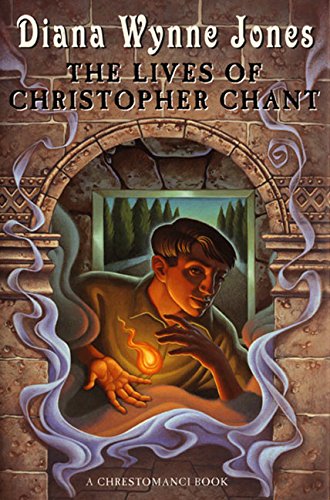
The Lives of Christopher Chant, cover

Diana Wynne Jones’s The Lives of Christopher Chant (1988) is my favorite example.  The first segment of this children’s fantasy novel is reminiscent of Dickens:  the young Christopher, neglected by his parents, is used by a scheming uncle to bring back forbidden goods from alternate worlds.  In the second phase of the book, Christopher is sent to a boarding school, where magic is one of the subjects routinely taught.  This section recalls the classic British schoolboy tale, with the addition of magic; it’s a sort of predecessor of (and perhaps inspiration for) Harry Potter, which Jones’s book predates by about twelve years.  The third part of the novel develops into a high-fantasy epic conflict.  At the end Christopher is selected for the future role of “Chrestomanci,” a Sorcerer Supreme position in the British government.

On first reading, I found it a bit of a swerve to go from the narrative of a difficult childhood to that of a genial school-days story.  When this evolved into a magical conflict of epic proportions, I was surprised again.  But the story held together through the continuity of the strongly sympathetic character Christopher (and his alternate-universe friend Millie).  The shifts in tone seemed natural concomitants of Christopher’s growing up and grappling with more mature problems.

In fact, starting on a small scale and gradually building up to grander events made the grander events more plausible, as in The Lord of the Rings.  While the opening section of Christopher Chant wasn’t exactly realistic, the issues were more limited and personal.  You had the sense of gradual expansion as the story went along.

C.S. Lewis provides a more pronounced example of this effect in the last novel of his Space Trilogy, That Hideous Strength (1945).  The novel starts out with extremely mundane matters of domestic ennui and academic politics.  This establishes such a sense of realism and naturalness that the later fantastic developments, involving everything from cosmic entities and biological abominations to Merlin and Atlantis, gain plausibility from being built on so familiar a foundation.

Uncertainty About the Narrator

Another kind of story where it may be hard at first to make out the nature of the plot is the tale with an unreliable narrator.

Among Others, cover

Jo Walton’s Among Others (winner of the Best Novel Hugo Award in 2012) is a fantasy, but it’s set in the present day and much of the action is mundane.  The main character, Morgana, is convinced that her mother is a witch.  But for most of the book, I wasn’t entirely sure that was true; there was a distinct possibility that Mori was an unreliable narrator who was imagining the whole thing.  Nor was it clear how the threat was going to be addressed.  I only really grasped what the narrative arc was around p. 291 out of 302 pages—that is, at the very end.

The uncertainty didn’t impair my enjoyment of the story.  Mori is an extremely sympathetic character, especially for those of us who loved F&SF back when those genres were considered odd and fans were regarded as uncool nerds.  And the events of the tale are fascinating even when you aren’t quite sure they’re real.  But the ambivalence of the plot kept me from forming a clear opinion about the book until the end.

The Nested or Layered Story

Occasionally a story will contain one or more other storylines—not like the explicit play within a play that occurs briefly in Hamlet or A Midsummer Night’s Dream, but more subtly interwoven.  This structure can make it hard to detect where the real plot of the overall story is.

In Patti Callahan’s Once Upon a Wardrobe, an Oxford student’s younger brother, who doesn’t have long to live, asks her to find out where the idea of Narnia in The Lion, the Witch, and the Wardrobe (then just published) came from.  The student, Meg Devonshire, tracks down the author, C.S. Lewis, and is drawn into hearing the story of Lewis’s life from Lewis himself.  Sequences describing Lewis’s personal history are thus sandwiched with Meg’s reports to her brother.  With the informal reportage building up to a kind of epiphany, one almost doesn’t notice that Meg’s own story is building toward a romance with a fellow student.  The intertwined narrative arcs make it hard to guess in advance where the book will end up.

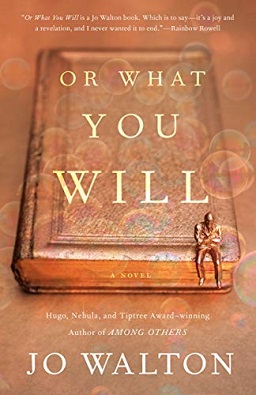
Or What You Will, cover

Much more complex is Jo Walton’s 2020 book Or What You Will, described in Wikipedia as a “metafictional fantasy novel.”  The first-person narrator is a kind of character archetype in the mind of fantasy author Sylvia Harrison, the basis of characters in many of her stories.  (The similarity of the imaginary Harrison’s oeuvre to that of the real-life Walton adds a further recursive layer to the story.)  Fragments of Harrison’s personal history are intermixed with chapters about the story Harrison is writing, and also with the (fictional?) narrator’s plan to deliver Harrison from a fatal illness that may make this her last writing.  Given these very different types of story, coexisting in the same book, it’s hard to know what kind of resolution we might expect.  Yet in the end, as with Callahan’s book, the story works.

The Side Quest That Takes Over

We also see cases where what originally seemed to be a minor side trip or interruption turns out to be the main plot of the whole story.  This can be irritating if we’re invested in what we thought was the original tale, and are waiting with mounting impatience for the interlude to conclude so as to get on with it.  At some point we need to realize that the apparent side trip or side quest is the point.

I had that reaction when first reading Howl’s Moving Castle (Diana Wynne Jones, 1986).  Near the beginning, the young heroine, Sophie, is magically transformed into an elderly woman.  Somehow I didn’t expect that transformation to last long.  But in fact Sophie continues as an old woman for almost the entire novel.  It took me a while to stop waiting for the transformation to be reversed and to accept it as a central feature of the plot.

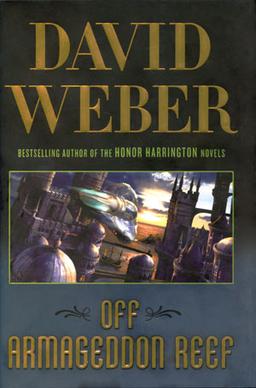
Off Armageddon Reef, first book in Safehold series, cover

Sometimes this is a matter of mistaking the main preoccupation of the author.  David Weber’s Safehold series starts with the premise that alien invaders, attracted by Earth’s burgeoning technology, have wiped out the human race, with the exception of a secret colony planted on a distant Earthlike planet in hopes of growing back to a level capable of dealing with the invaders.  The refugee world Safehold is deliberately kept under a rigid theocracy which suppresses technology, originally to avoid detection by the enemy, but later going far beyond that motive to a permanent proscription.  One might expect that the main plotline of the series would involve reacquiring high technology and re-engaging the invaders.  But so far the series has progressed through ten bulky books devoted almost entirely to detailing the military and political campaigns of a sort of Protestant Revolution to overthrow the dominant theocracy.  I’m still waiting for the lengthy storyline to wrap around back to the plotline I want to see developed.

Similarly, John Ringo’s “Council Wars” series starts with an intriguing premise in which a high-tech near-future civilization on Earth collapses into a kind of pseudo-medieval chaos due to a conflict among the ruling council.  In the initial high-tech utopia, people have entertained themselves by (among other things) participating in live-action game-playing, which involved biologically engineering dragons, randomly hiding useful minerals in artificial mountains, and so forth.  The opening conflict thus sets up a situation in which the main characters need to operate in something rather like a D&D game or fantasy world, dragons and all, which they’d initially created themselves but no longer control.  What baffled me as this story developed (four books so far) was that Ringo was more interested in military-SF preoccupations—what would combat be like using aircraft carriers with dragons instead of aircraft?—rather than riffing on the fantasy tropes themselves.

Defying Narrative Conventions

In some cases, writers seem to be determined to depart from traditional narrative conventions in ways that make the storyline obscure.  I’m generally skeptical about such attempted departures—they often seem mannered or artificial—but there’s no denying they sometimes produce interesting results.  Or What You Will, cited above, is an example of an odd approach that nonetheless presents an engrossing and satisfying tale.

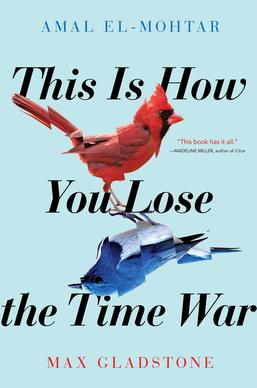
This Is How You Lose the Time War, cover

This Is How You Lose the Time War, a Hugo-winning 2019 novella, is a peculiar kind of epistolary story that consists of deliberately obscure messages left for each other by two time-traveling agents of opposing empires.  It’s not clear at first where the story is going, and the message-writing format deprives the reader of the background information that might normally help establish what’s going on.  But Time War eventually develops into a kind of romance, as well as a meditation on war and politics, that’s definitely worth reading.

There Is No Plot

Finally, there’s a class of stories that don’t actually have an overall plot at all.  This isn’t necessarily a fault, but can be a virtue:  “a feature, not a bug.”  In these kinds of stories, our natural tendency to look for a plot is bound to be frustrated.

A fellow writer on Critique Circle, reading Kenneth Grahame’s The Wind in the Willows, expressed puzzlement about the plot of the book.  I responded that it’s like Winnie-the-Pooh:  a collection of linked but separate episodes that don’t actually have an overall plot.  There is a sort of overall character arc for Christopher Robin, but it’s not really a plot—just as The Wind in the Willows develops a coherent plot only toward the end, within the background created by a set of separate episodes.  My fellow writer, who was quite familiar with children’s stories, grasped the point at once from the Pooh analogy.

"There Will Come Soft Rains," illustration
“There Will Come Soft Rains”

We also find the occasional short story that’s essentially a mood piece, evoking an emotion without actually depicting a sequence of events.  In the science fiction canon, good examples include Arthur C. Clarke’s “History Lesson,” a meditation on the transience of the human species, and Ray Bradbury’s “There Will Come Soft Rains,” a moving story depicting the aftermath of a nuclear war.  In these short pieces, however, there isn’t enough time to build up much readerly expectation to be frustrated; it quickly becomes clear that the point of the story is to express a mood rather than to tell a tale.

When the plotline of a story doesn’t immediately become clear, or is subverted, the best advice may be simply to roll with it and see what happens.  And I give myself that advice occasionally when I’m puzzled with a tale.

Conclusion

This does, however, require us to trust the author.  Knowing an author’s work can give me confidence that taking the time to read will be worth it in the end.  Hearing that an author or a work is highly regarded by others may, to a lesser degree, give us a similar confidence.  If the author is new to us, though, that trust may be harder to come by.  Lacking a sense of direction, we may give up on a story prematurely.  If a writer isn’t going to meet the reader’s ordinary expectations about where a story is going, they’ll need to find other ways to reassure the reader that the tale is worth the investment of time.

Foundation and Dune

As the Apple Foundation series has gradually diverged from the books, sinking from ‘adapted from Asimov’s series’ to ‘loosely inspired by Asimov’s series’ levels, we’ve seen a dramatically opposite example of a classic SF novel adaptation:  the latest movie version of Frank Herbert’s Dune.  The two make an instructive comparison.

Spoiler Alert!

Apple Strikes Out

I haven’t quite finished viewing this season of the Foundation TV series yet, but the trend is pretty clear.  Apple’s version has departed from the storyline of the written works so extensively that I can’t picture how they could possibly get back to it.  Unfortunately, what Goyer & co. have replaced it with is just routine space opera, mildly interesting but no more. 

The original series, as I said in my last post, is cerebral.  It’s more like a political drama than like Star Wars.  And it seems to me that, pace the commentators who consider it unfilmable, the original story could have been filmed in the manner of a political drama, with a modicum of action involved (Hober Mallow’s face-off with the Korellians in “The Merchant Princes,” the escape of the Darells and Ebling Mis from the Mule’s minions, et cetera).  But that’s not how moviegoing audiences have been taught to think of science fiction, and the Apple writers have struck out in a different direction—back to the safe and familiar, rather than what’s distinctive in the Foundation series.

The warship Invictus

The judgment of Rob Bricken in Gizmodo (10/22/21)—“Foundation Just Became Star Wars, and It Sucks”—may be a little simplified.  But it’s basically sound.  The example that triggered Bricken’s article is a useful one.  Several of the episodes (6-8) focus on how warriors from Anacreon kidnap several Foundation folks to try and gain control of a massive Imperial warship, the Invictus.  The ship is presented as a kind of Death Star, a crucial weapon.  The Anacreonians want to use it for revenge, to destroy Trantor, the capital of the Empire—which is presented as a major blow to civilization, something Our Heroes must stop.

But this is all backwards.  In “The Mayors,” third part of the first Foundation book, Anacreon does get the Foundation to help them refurbish an old Imperial warship that they found derelict in space.  The Anacreonians think of this as a major victory, though their concern is expanding their rule in the Periphery, not attacking Trantor.  But the whole point of the incident is that possession of this Big Damn Weapon makes no difference in the course of history.  The canny Salvor Hardin neutralizes the significance of this warship through entirely nonviolent means—a matter of social and psychological leverage rather than military force.  (I’m avoiding the details so as not to spoil the story for those who may want to go back fruitfully to the written works.)

Nor, for that matter, is the fate of the Imperial capital especially important in the long run.  The Seldon Plan predicts its fall in the early years of the Plan, and the collapse of the Empire is necessary to create the environment in which the rise of the Foundation can occur.

Meanwhile, in the TV series, the uploaded simulacrum of Hari Seldon appears to be trying to establish the Second Foundation on his homeworld of Helicon, a planet of no significance in the original series.  Aficionados of the books will recognize that this change (unless it’s all an elaborate deception) would undo most of the action and tension of the latter half of the series.  Again, I’m being deliberately vague (read the books!).

Emperor Day

And Apple continues to follow the Emperors through a peculiar religious ordeal that may or may not have any long-term significance.  There is a religion-politics connection in the original series; it’s possible that Apple intends to bend this arc back to meet the original plotline in some way.  But, again, it’s so far off track already that the result is likely to have little resemblance to Asimov’s story.

Apple’s version of Salvor Hardin (who at this point shares nothing but the name with Asimov’s character) continues to be presented as a Chosen One.  So is Gaal Dornick, on whom the writers have bestowed an ability to predict the future by some sort of mathematical or mystical intuition (a notion that almost seems to have been borrowed from Dune, oddly enough).  In Episode 6, “Death and the Maiden,” at 34:30, Hari Seldon goes to far as to talk about “an entire galaxy pivoting around the actions of an individual.”  But that’s exactly what the premise of the Seldon Plan denies, as Asimov tells us over and over again.  Emphasizing the crucial importance of individuals may be a good narrative practice in itself (and is arguably true in fact).  It is, however, simply inconsistent with Asimov’s premise—at least until the appearance of the Mule, the ‘exception that proves the rule.’

So far, at least, Apple’s Foundation TV series exemplifies one way an adaptation can go wrong.  By ignoring what’s interesting and engaging in the original books, and substituting entirely different content that simply happens to be what’s in fashion at present, the adaptation can lose what’s valuable in the original without the benefit of anything new and equally interesting.

Villeneuve Scores a Victory

Frank Herbert’s iconic SF novel Dune (1965) has been transmuted to video twice before.  A 1984 film by David Lynch has received mixed reviews; it has its quirks, but the major problem is that, since a 507-page book is compressed into 2:17 of film, it’s unlikely anyone not already familiar with the book could follow the complex plot.  In 2000, the Syfy Channel released a TV mini-series version; I’ve never seen it, but, again, reports have been mixed.

Denis Villeneuve’s version hit American theatres on October 21, 2021.  The new film is impressive.  Note that this show is only the first half of the story; Dune:  Part Two, is currently (12/2021) scheduled for release October 20, 2023.  That makes sense.  No two-hour movie could possibly do justice to the book.  (I’m only speaking here about the first book; describing the innumerable sequels, prequels, and associated volumes that have come out since would take an entire post by itself—but IMHO, the later add-ons decline in quality exponentially, so we can safely ignore them here.)

Zendaya as Chani

What’s striking about the new movie is the care it takes in translating Herbert’s work to the screen.  The novel’s remarkable worldbuilding is reflected in stunning visuals that fit together smoothly to support the plot.  Watching it, I had the same kind of reaction I did watching The Fellowship of the Ring twenty years ago:  wow, there it is, just as I imagined it:  ornithopters, stillsuits, Duke Leto, Chani.  The casting is excellent; almost all the actors embody the characters vividly.  (One of the reasons I’ve never gone back to watch the TV mini-series, which I taped at the time, is that I just can’t envision William Hurt as the Duke.)

Moreover, the plot holds together.  Villeneuve follows the storyline of the book very closely.  He does it intelligently, though, rather than slavishly.  For example, there was a banquet scene in the book that doesn’t appear in the movie.  But the banquet isn’t really essential to the plot, and it would have been particularly hard to render it on film in any case—almost all the interest of the scene consists in the characters’ internal thoughts about what’s happening.  So, although I’d been looking forward to seeing that scene, I must agree that it made sense to skip it to save time and finesse a difficult cinematic challenge.

On the whole, though, the storyline of the movie closely reflects that of the book.  This means we get to enjoy the things that made the book engrossing in the first place:  the conflicting allegiances that the hero, Paul Atreides, must navigate; the quasi-mystical disciplines and secret long-term planning of the Bene Gesserit; the devious alliance of the Emperor and the villainous House Harkonnen; the way Paul and his mother Jessica begin to become familiar with the culture of the desert-dwelling Fremen, first officially, and then later when they’re on the run from the Harkonnen.  These pieces have to fit together perfectly to make the plot understandable; and from what I hear, the average moviegoer who has not read the novel is enabled to follow that intricate plot.  This is a noteworthy achievement for the director, screenwriters, and cast.

Aerial battle in 2011 The Three Musketeers

When we hear that a favorite book is being translated to film, this is what we’re primarily looking for:  a new perspective on what was so good in the book.  A movie can get away with substantially altering the story:  see, for instance, my earlier discussion of Man of La Mancha, or the 2011 steampunk version of The Three Musketeers.  But if that’s the path they choose to follow, it’s up to the screenwriters to make the revised story work, and give us a new structure that’s just as satisfying as the original (though perhaps in different ways).  The third possibility is that instead of doing either of those two things, the writers just mess up the original story without giving us a new “take” that can stand on its own feet.  And unfortunately, that third category is the one into which Apple’s Foundation seems to be falling.

Hope for the Future

Perhaps the Foundation crew will still find a way to pull something great out of the plot snarl they’ve created so far.  Perhaps not.  But I’m pleased that the box-office success of the latest Dune can stand as an example to the industry that a genuinely faithful version of a SF story can be both a critical and a money-making success.  With luck, we might see a trend in this direction—drawing on the widely varied types of stories available in the F&SF genres rather than simply looking for the next Game of Thrones or Star Wars.